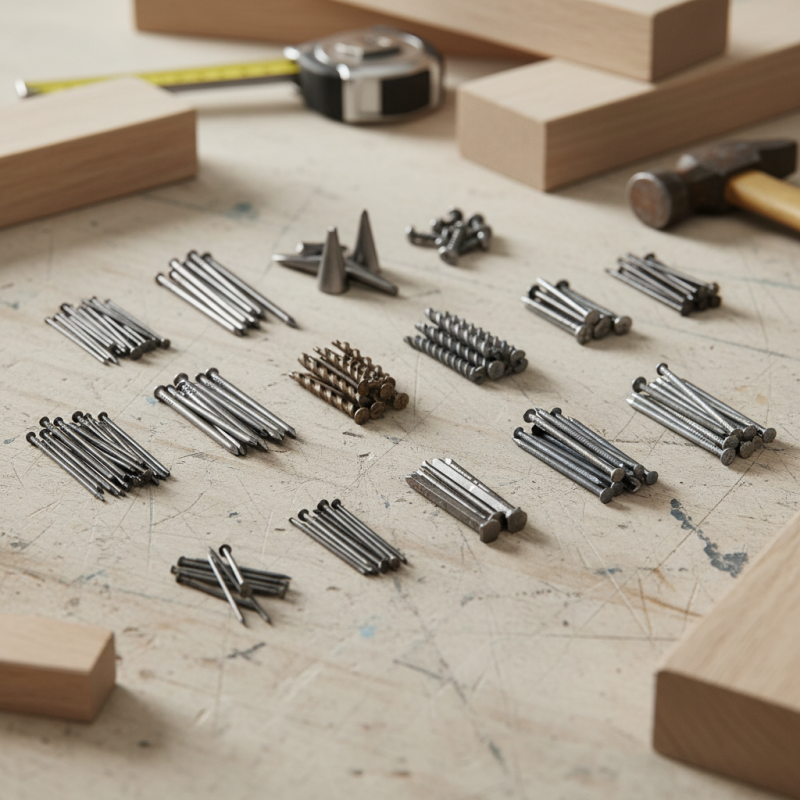
Top 10 Types of Finish Nails for Your Next Project?
When embarking on a home project, selecting the right finish nails is crucial. The market offers a variety of types of finish nails, each suited for specific applications. Understanding these options can significantly enhance your woodworking projects.
Using the appropriate finish nails can improve both the strength and appearance of your work. Some types of finish nails, like brad nails, are perfect for lightweight materials. Others, such as casing nails, provide added durability for trim work. Each type has its unique features that can benefit your project.
It's essential to consider factors like material thickness and nail length before making your choice. Not all types of finish nails will yield the desired results in every scenario. Reflection on past projects can help guide your selection. Choosing the right type can elevate your craftsmanship, while the wrong choice might lead to frustrating failures.
Types of Finish Nails: An Overview for DIY Projects
When working on DIY projects, choosing the right finish nails is crucial. Various types cater to different needs and applications. Commonly used are brad nails, often employed for lightweight trim and molding. Their fine gauge makes them less noticeable, ensuring a neat finish. For heavier materials, you might consider finishing nails, which come in larger sizes and provide better holding power.
Another type is the stainless steel finish nail, ideal for outdoor projects. They resist corrosion, ensuring durability. If you need versatility, 18-gauge nails work well in multiple scenarios. They strike a balance between strength and subtlety. However, while these options provide security and aesthetics, some may underestimate the importance of nail size.
Choosing the wrong size can lead to weak joints or visible holes. It’s a simple mistake that can detract from your project’s appearance. Reflecting on the materials used and their compatibility with the finish nails will avoid potential issues. Proper selection and attention to detail will enhance the quality of your work.
Characteristics of Common Finish Nail Types
Choosing the right finish nails is crucial for a successful project. Different types of finish nails have unique characteristics. For instance, brad nails are thinner and ideal for lightweight trim. They leave smaller holes, which means less puttying. On the other hand, finishing nails are sturdier and support heavier work. These nails are great for attaching molding and cabinetry.
When selecting finish nails, consider their material. Stainless steel nails resist rust, making them ideal for outdoor projects. Galvanized nails are another option for moisture-prone areas. Each type serves a specific purpose; choose wisely to meet your project's demands. Pay attention to nail length as well. Longer nails provide better holding power, but they can split delicate wood.
**Tip:** Always test your nail choice on scrap wood. This helps gauge the nail's effect on your project and allows adjustments.
Be cautious with the hammering technique. Over-hitting may damage the surface. Use a punch for a clean finish. Inspect the material before starting; it can affect how the nail behaves. Proper selection and technique lead to better results, while mistakes offer valuable lessons.
Best Uses for Each Finish Nail Type
When it comes to selecting finish nails for your project, understanding their best uses is crucial. For instance, 16-gauge finish nails are versatile. They work well for trim, moldings, and furniture assembly. Their thickness provides strength, but they can leave noticeable holes. A careful choice of filler is needed to address this.
Another popular type is the 18-gauge nail, ideal for delicate projects like cabinetry and paneling. These nails are thinner, which reduces the risk of splitting wood. However, their finer nature means they may not hold up as well under heavy loads. Consider the weight of your materials before choosing this option.
For more specialized work, 23-gauge pins excel in very light applications such as small moldings or crafts. Their tiny size results in minimal hole visibility. Yet, their lack of holding power can require glue or other reinforcement methods. Weighing the pros and cons of each type ensures a better-end result.
Top 10 Types of Finish Nails for Your Next Project
| Finish Nail Type | Common Uses | Length | Material |
| Brass Finish Nails | Decorative trim, cabinetry | 1-1/4" - 2" | Brass |
| Steel Finish Nails | General woodworking | 1" - 3" | Steel |
| Galvanized Finish Nails | Outdoor projects, pressure-treated wood | 1-1/4" - 3" | Galvanized steel |
| Stainless Steel Finish Nails | Coastal areas, high-moisture environments | 1-1/4" - 2-1/2" | Stainless steel |
| Casing Nails | Door and window casings | 2" - 3-1/2" | Steel or stainless steel |
| Finishing Nails | Trim, moldings, cabinetry | 1" - 2-1/2" | Steel |
| Brad Nails | Lightweight trim work | 1" - 2" | Steel |
| Tacker Nails | Upholstery, attaching fabric | 1/2" - 1" | Steel |
| Hidden Nails | Flooring, paneling | 1-1/2" - 2" | Steel |
Factors to Consider When Choosing Finish Nails
When choosing finish nails for your project, several factors come into play. The length of the nail is crucial. Generally, longer nails provide better holding power. However, using nails that are too long can cause splitting, especially in softer woods. Aim for a balance that fits your material thickness.
Material type also matters. Steel nails are strong and resistant to bending, but they can rust. Consider using stainless steel for outdoor projects to prevent corrosion. Additionally, the nail head style can affect the finish. Countersunk heads may be less visible, while larger heads provide better holding but may require more finishing work.
You may want to assess the gauge of the nails as well. Thicker nails lend strength, while thinner ones minimize damage to the wood. Each project may require a different approach. Reflect on your previous experiences to determine what worked best and what needs improvement. Pain points from past jobs can guide your selection for a smoother outcome this time.
Tips for Properly Installing Finish Nails
When installing finish nails, precision is key. Properly driving nails ensures a clean look and structural integrity. According to the National Wood Flooring Association, improper nailing can lead to future problems, such as warping or loosening. This is why understanding the ideal angle and depth is vital.
Ensure you select the right type of finish nail for your project. Common options include brad nails and finish nails, each serving different purposes. The American Wood Council emphasizes that nail size should match the material thickness. For example, using 15-gauge nails is often ideal for trim work, while 18-gauge brads work better for delicate applications.
Take time to practice proper technique. Hold the nail gun steady and avoid excessive force. Uneven pressure can result in bent nails. According to a survey by the Home Improvement Research Institute, 30% of DIY enthusiasts struggle with nail placement accuracy. Slow and steady wins the race, so don’t rush the process.
Top 10 Types of Finish Nails for Your Next Project