Essential Tips for Choosing a Switching Power Supply?
Choosing the right Switching Power Supply (SPS) can be challenging. Industry expert John Smith emphasizes, “The right SPS can make or break your project.” With so many options available, making the right choice requires careful consideration.
SPSs convert electrical power efficiently. They are crucial for various applications, from small gadgets to large industrial machines. Despite the efficiency of these power supplies, many users struggle to select the ideal model. Misunderstanding specifications can lead to failure or inadequate performance. It’s important to recognize that not all SPSs are created equal.
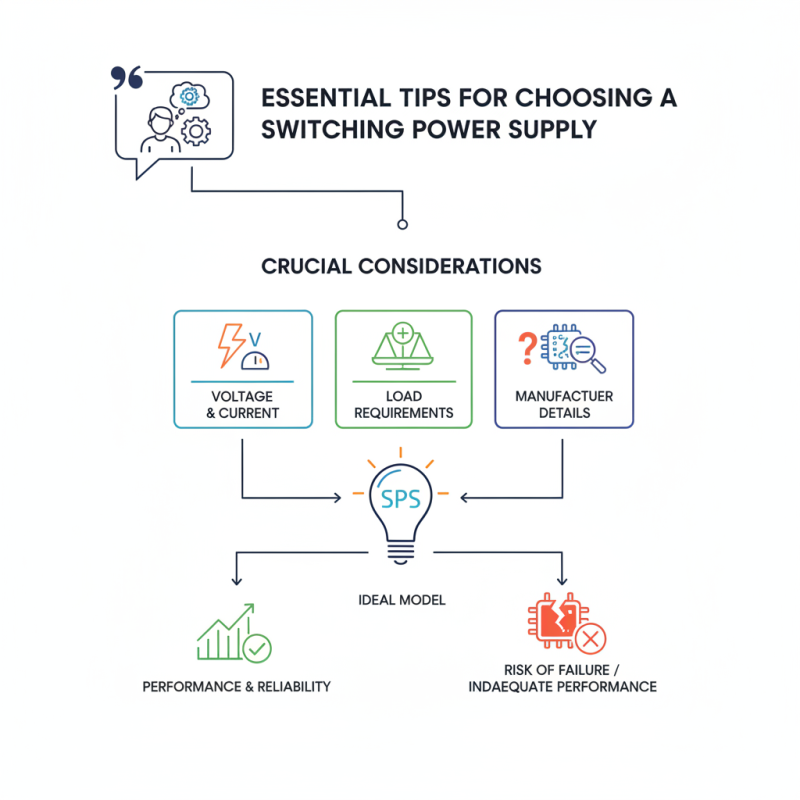
Understanding your needs is essential. Consider factors like voltage, current ratings, and load requirements. A mismatch can cause serious damage. Sometimes, manufacturers don't provide all the necessary details, leading to confusion. Reflection on these points can guide you to a more informed decision. Your choice of Switching Power Supply significantly impacts performance and reliability.
Understanding the Basics of Switching Power Supplies
Switching power supplies have gained prominence due to their efficiency and compact design. They convert electrical energy with minimal waste. According to a report from the International Energy Agency, these power supplies can achieve up to 95% efficiency in optimal conditions. This is a significant improvement over traditional linear power supplies.
Understanding the basics is crucial. Switching power supplies use high-frequency switching to regulate voltage output. However, noise and electromagnetic interference can be issues. Some designs overlook adequate filtering, which can lead to voltage spikes. A study revealed that poor design choices are responsible for nearly 30% of failures in power supply units.
When selecting a power supply, consider load requirements and thermal management. The temperature can affect performance. A unit that runs too hot may fail prematurely. Reports suggest that operating a power supply beyond its rated temperature can reduce its lifespan by 50%. Look for features that ensure better heat dissipation. Balancing efficiency, noise, and thermal considerations can be challenging but essential.
Identifying Your Power Requirements for Applications
Choosing the right switching power supply starts with understanding your power requirements. Different applications have unique needs. For example, industrial automation often requires high efficiency and a stable output. A report by the Electronic Industries Alliance states that around 27% of energy is lost in traditional power supplies. This loss highlights the importance of selecting supplies that match your needs closely.
Knowing your exact voltage, current, and power ratings is key. A slight mismatch can lead to underperformance or failure. Industry data suggests that operating power supplies at 80% of their capacity can enhance longevity and reliability. For sensitive applications, consider inrush current. It can temporarily exceed maximum ratings. Ignoring this could damage components.
Consider environmental factors, such as temperature and ventilation. A power supply might work well in one setting but fail in another. The average lifespan of a switching power supply can decline rapidly in extreme conditions. Reports show that 50% of failures occur due to thermal stress. Therefore, thoughtful assessment of your application’s specifics is crucial for optimal performance.
Evaluating Efficiency Ratings and Their Importance
When selecting a switching power supply, efficiency ratings are essential. A high efficiency means less energy waste, which directly impacts performance. Most power supplies have varying efficiency levels. These levels affect your system’s overall energy consumption. A power supply rated at 80% efficient will waste 20% of the energy. This wasted energy generates heat, which could lead to overheating issues.
Consider the implications of widespread inefficiency. Higher operating costs can be frustrating. Regular monitoring and tweaking can help improve performance too. Look for power supplies with an efficiency rating above 80%. Some models achieve above 90%, providing noticeable savings over time. Yet, simply aiming for high efficiency isn’t enough; ensure compatibility with your system’s voltage and current requirements.
Keep in mind that efficiency isn’t the only factor. The size and form factor also matter. A compact design may save space but can lead to cooling challenges. Every choice has its trade-offs. Establishing a balance between efficiency, size, and thermal management is crucial for optimal operation. This process can be iterative and require thoughtful adjustments along the way.
Choosing the Right Form Factor and Design Specifications
When selecting a switching power supply, understanding its form factor is crucial. The size and shape determine how it fits into devices. A compact design is often necessary for tight spaces. Consider how heat dissipation is managed. Inadequate cooling can degrade performance over time. You might overlook this aspect, but it is vital.
Design specifications play a pivotal role in performance. Check voltage regulation, ripple, and efficiency. These details matter for reliability and longevity. Efficiency reduces energy waste, which is good for the environment and your budget. Failing to prioritize efficiency might lead to higher operational costs.
Additionally, think about the application of the power supply. Will it be used in a sensitive environment? A design that offers filtering and noise reduction is important. Sometimes, the cheapest option seems appealing. However, it may not provide long-term value. Balancing cost and quality requires careful thought.
Essential Tips for Choosing a Switching Power Supply
| Criteria | Description | Importance |
| Output Voltage | Select a voltage level suitable for your application, such as 5V, 12V, 24V, etc. | High |
| Output Current | Ensure the power supply can deliver the required current output for your loads. | High |
| Efficiency Rating | Look for high-efficiency ratings (80% and above) to minimize energy waste. | Medium |
| Form Factor | Choose a form factor that fits your application's design, such as ATX, Mini-ITX, etc. | Medium |
| Regulatory Compliance | Ensure compliance with relevant safety and performance standards (UL, CE, etc.). | High |
| Protection Features | Look for overvoltage, overcurrent, and thermal protection features. | High |
| Operating Temperature Range | Ensure the supply can operate in your environment's temperature range. | Medium |
| Cost | Consider the total cost against the features and reliability of the unit. | Medium |
Assessing Reliability and Manufacturer Reputation in the Market
When selecting a switching power supply, the reliability of the product is crucial. You should examine the manufacturer's reputation. A company with a strong history in the industry often indicates quality. Look for feedback from customers and professionals. Reviews can reveal potential issues and highlight dependable products. However, not all feedback is honest. Some reviews may be biased or exaggerated. This makes it essential to cross-reference information.
Additionally, consider the materials used in production. Quality components can enhance the performance and lifespan of the power supply. Pay attention to warranties as well. A longer warranty could signify confidence from the manufacturer. Yet, it's wise to analyze the terms closely. Some warranties come with hidden conditions that make them less valuable.
Don't overlook industry certifications. These can affirm that safety and performance standards are being met. But keep in mind that certifications may vary by region. Research the relevant standards and ensure the product aligns with your needs. Balancing reliability and reputation can be challenging. Often, it requires time and careful thought to find the right fit.
Essential Tips for Choosing a Switching Power Supply