Essential Tips for Choosing the Right Hotel Thermostat?
When it comes to hotel comfort, the thermostat plays a crucial role. As Mark Anderson, a leading expert in hotel climate control, states: "A well-chosen hotel thermostat can make or break a guest's experience." Selecting the right model ensures guests enjoy their stay, maintaining an ideal temperature that meets diverse needs.
Many hotels overlook this important aspect. Often, outdated or ineffective thermostats lead to guest dissatisfaction. A precise and user-friendly hotel thermostat offers guests the control they desire over their environment. This decision impacts not only guest comfort but also energy efficiency, which is increasingly important in today’s eco-conscious world.
Hotels must consider various factors, such as ease of use, accuracy, and energy-saving features. Each element contributes to an optimal guest experience. However, too many hotels are hesitant to invest in modern solutions, risking their reputation. Reflecting on these choices can reveal opportunities for improvement and enhance guest loyalty.
Understanding the Importance of Hotel Thermostats in Guest Comfort
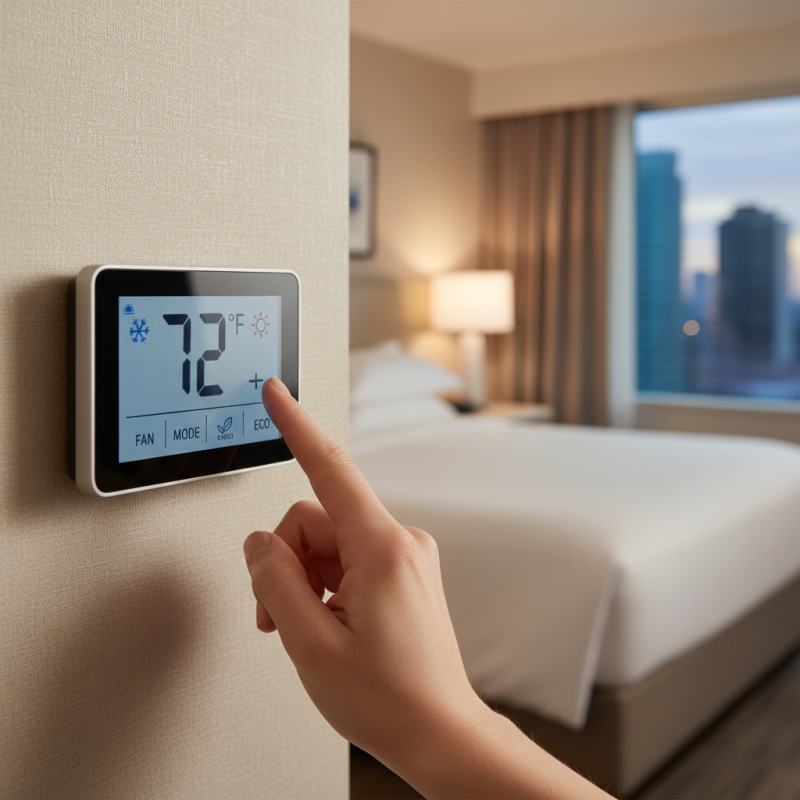
Hotel thermostats play a crucial role in ensuring guest comfort. A well-functioning thermostat can make a significant difference in the overall experience of a stay. Many guests appreciate the ability to control their environment. Being comfortable in a hotel can greatly enhance their enjoyment of the trip.
Selecting the right type of thermostat is essential. Consider the ease of use; guests should be able to adjust settings without confusion. Display clarity also matters; a bright, readable screen is important for late-night adjustments. Smart thermostats are becoming popular. They can adapt to guests’ preferences, maintaining a consistent temperature automatically. However, they can be complicated for some.
It's essential to check maintenance routines. A neglected thermostat can lead to guest complaints. Regular servicing helps avoid unexpected breakdowns. Guests may be unhappy if they cannot find a comfortable temperature. Having accessible support for guests can also alleviate stress. It’s crucial to create an environment that feels inviting and manageable.
Essential Tips for Choosing the Right Hotel Thermostat
| Temperature Control Range | Energy Efficiency Rating | User-Friendly Interface | Compatibility with Smart Systems | Cost |
| 60°F - 80°F | A+ | Touch Screen | Yes | $150 |
| 55°F - 75°F | B | Analog Dial | No | $100 |
| 64°F - 78°F | A++ | Remote Control | Yes | $200 |
| 58°F - 82°F | C | Manual Control | No | $80 |
| 62°F - 76°F | A+++ | Smartphone App | Yes | $250 |
Key Features to Look for in a Hotel Thermostat
When selecting a hotel thermostat, it's crucial to focus on key features that ensure guest comfort and energy efficiency. According to a report by the American Hotel and Lodging Educational Institute, energy-efficient thermostats can reduce energy consumption by up to 30%. Look for programmable options that allow guests to set their preferred temperature before arrival, enhancing their experience.
User-friendly interfaces are essential. Guests should be able to adjust settings with ease. A touch-screen interface or simple dials can significantly enhance usability. Additionally, consider the thermostat's ability to integrate with smart devices. This feature is becoming increasingly popular among hotel guests, especially millennials and Gen Z.
Energy management is another critical aspect. A thermostat with occupancy sensors can automatically adjust temperature settings based on room usage. This not only saves energy but also contributes to sustainability efforts. Hoteliers should weigh the initial investment against long-term savings on energy bills. Balancing cost with efficiency remains a challenge in the industry. Each decision impacts guest satisfaction and operational costs.
Types of Thermostats Suitable for Hotel Environments
When selecting thermostats for hotel environments, various types are available. Digital thermostats are popular for their precision and user-friendly interface. They allow for easy temperature adjustments from a central system. Many hotels benefit from their programmable features, enabling guests to set their preferences.
Smart thermostats are gaining traction too. These devices learn guest behaviors and adjust the temperature accordingly. They can significantly enhance energy savings. However, they require a stable Wi-Fi connection, which might cause issues in certain areas.
Tip: Consider ease of use for guests. A complicated thermostat can lead to frustration. Ensure it’s intuitive and well-labeled. Another tip is to assess the room layout. Some areas might need different climate controls, impacting guest comfort. A flexible approach often leads to better satisfaction.
Types of Thermostats Suitable for Hotel Environments
Energy Efficiency Considerations for Hotel Thermostats
Choosing the right thermostat for a hotel can significantly impact energy efficiency. Many hotels overlook the importance of smart thermostats. These devices can adjust the temperature based on guest occupancy, saving costs when rooms are unoccupied. For example, programmable settings allow for temperature changes throughout the day, ensuring comfort while reducing energy usage.
Many hotel managers struggle with balancing guest comfort and energy costs. A poorly chosen thermostat can lead to wasted energy. Traditional models may keep heating or cooling even when rooms are empty. In contrast, modern thermostats provide real-time data, helping staff make informed decisions. This proactive approach not only boosts efficiency but also enhances the guest experience.
It’s also crucial to consider the ease of use. If guests find a thermostat too complicated, they may override settings or use extra energy. Simplified interfaces or mobile app controls can improve user experience. Reflecting on these factors can lead to better energy management. Energy efficiency is not just about cutting costs; it shows a commitment to sustainability.
Best Practices for Installing and Maintaining Hotel Thermostats
When it comes to installing and maintaining hotel thermostats, attention to detail makes a significant difference. Choose a location away from direct sunlight and drafts. This avoids inaccurate temperature readings. Positioning is crucial for energy efficiency and guest comfort.
Regular maintenance is essential. Schedule inspections every few months to ensure smooth functionality. Clean or replace filters to improve air circulation. A neglected thermostat can lead to inconsistent temperatures. Guests may complain, impacting their overall experience.
Consider programming options to enhance convenience. Set schedules based on peak usage times. This can save energy and reduce costs. However, if the programming is too complex, it may frustrate users. Simplified instructions can help. Balancing efficiency with user-friendliness is key.