Top Tips for Choosing the Best Robot Arms for Your Business?
In today's competitive landscape, Robot Arms have emerged as essential tools for businesses. These versatile machines can enhance productivity and precision in various industries. However, choosing the right Robot Arms for your organization requires careful consideration. With numerous options available, decisions can feel overwhelming.
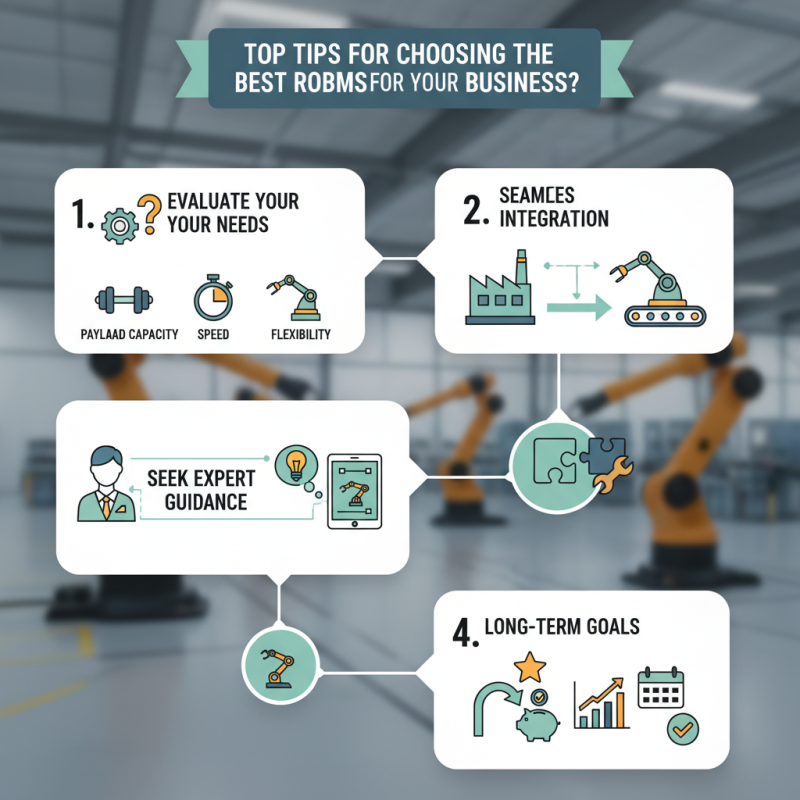
Every business has unique needs. It’s crucial to evaluate operational requirements before investing in Robot Arms. Factors such as payload capacity, speed, and flexibility are pivotal. A mismatch might lead to inefficiencies and increased costs. Yet, don't overlook the importance of integrating these robotic solutions smoothly into existing workflows.
Seeking expert guidance can help mitigate risks. Consulting with specialists can provide insights tailored to your business. Understanding the intricacies of Robot Arms, their functionalities, and their best applications is vital. Reflecting on your company's long-term goals will ensure a wise investment in technology that will pay off in the future.
Understanding the Different Types of Robot Arms Used in Industries
When selecting robot arms for industrial applications, it’s essential to understand the different types available. Collaborative robot arms, or cobots, are designed to work alongside humans. They prioritize safety, making them ideal for small assembly lines. Their flexibility allows businesses to quickly adapt to changes. However, they might not be suitable for heavy lifting tasks.
Industrial robot arms, on the other hand, excel in precision and endurance. They are often used in manufacturing and packaging sectors. These arms can handle heavy loads and work continuously without fatigue. Yet, their lack of adaptability can be a drawback in dynamic environments.
Another category is SCARA robots. These have a unique design that allows them to perform rapid movements. They are particularly effective for tasks like pick-and-place operations. Still, their limited range of motion can be a factor to consider. Evaluating your specific needs is crucial. Each type of robot arm has strengths and weaknesses. Therefore, understanding these nuances can guide you in choosing the right solution for your business needs.
Top Tips for Choosing the Best Robot Arms for Your Business
| Type of Robot Arm | Load Capacity (kg) | Radius of Operation (m) | Typical Applications | Price Range ($) |
| Articulated Robot Arm | 50 | 1.5 | Welding, Assembly | 25,000 - 50,000 |
| SCARA Robot Arm | 20 | 1.0 | Pick and Place, Packaging | 10,000 - 30,000 |
| Delta Robot Arm | 5 | 0.8 | Food Handling, Electronics Assembly | 15,000 - 25,000 |
| Collaborative Robot Arm | 10 | 1.2 | Assembly, Quality Control | 20,000 - 40,000 |
Factors Influencing the Cost of Robot Arms: A Comprehensive Overview
When selecting the right robot arms, understanding the factors influencing their cost is crucial. The price can vary significantly based on functionality, payload capacity, and precision. Businesses must consider how these elements align with their operational needs. Advanced robot arms with high precision usually come at a premium. Budget constraints play a critical role, and underestimating costs can lead to project setbacks.
One essential tip is to assess your production goals. What tasks will the robot arm perform? Understanding this helps in selecting the right model. Another important factor is the level of integration required. Custom solutions may increase initial costs but can enhance overall efficiency in the long run.
Additional costs often arise from maintenance and training. Robot arms require regular upkeep to maintain optimal performance. Investing time in training staff is crucial for effective operation. It might feel overwhelming at first, but proper training mitigates potential risks. Always weigh long-term benefits against immediate expenses to make informed decisions.
Top Tips for Choosing the Best Robot Arms for Your Business
Evaluating Payload Capacity and Its Impact on Operational Efficiency
When selecting robot arms for business operations, evaluating payload capacity is crucial. The payload capacity determines how much weight a robotic arm can handle effectively. Research by the International Federation of Robotics highlights that nearly 70% of robotic applications directly relate to payload capability. This indicates its significance in enhancing efficiency and production rates.
Payload capacity impacts both workflow and the types of tasks the robot can perform. For instance, a robotic arm with a capacity of 10 kg may be ideal for light assembly, while a 100 kg capacity arm is necessary for heavy industrial applications. Optimizing load balance can reduce operational strains, resulting in better longevity and reduced maintenance costs.
It’s important to consider the future growth of your business. Choosing a robot arm with a higher payload capacity than currently needed offers flexibility for upcoming projects. However, it’s essential to reflect on the investment. Higher capacity often means higher costs, so businesses must analyze their long-term needs versus short-term budgets. Ignoring this can lead to underutilization or overspending, affecting operational budgets.
Key Technologies in Robot Arms: Precision, Speed, and Flexibility
When selecting the best robot arms for your business, focus on three key technologies: precision, speed, and flexibility. Precision is crucial for tasks that require high accuracy. For example, in electronics assembly, a slight deviation can lead to significant defects. Choose arms that can perform consistently within tight tolerances.
Speed is another important factor. In manufacturing environments, a faster robot can boost productivity. However, it’s essential to strike a balance. Too much speed can compromise safety and precision. Assess the specific needs of your operations. Some tasks may benefit from slower robots that offer greater control.
Flexibility is vital in today’s rapidly changing industries. A versatile robot arm can handle various tasks, adapting to different products without extensive reprogramming. This adaptability can be a double-edged sword. While it allows for a quicker response to market demands, it may require more complex programming. Ensure your team is trained to manage this complexity effectively.
Assessing ROI: How Robot Arms Improve Productivity and Reduce Costs
Implementing robot arms in a business can significantly boost productivity. These automated systems excel at repetitive tasks. They work quickly and with precision. This leads to fewer errors compared to manual labor. Businesses often find they can complete tasks faster, which increases overall efficiency.
However, measuring ROI is crucial. The initial investment in robot arms can be high. It’s essential to analyze long-term savings. For instance, reduced labor costs can offset initial expenses. Additionally, fewer workplace accidents may lower insurance costs, contributing to savings. Improving product quality can also enhance customer satisfaction and retention.
Still, not every business may experience instant benefits. Some may face technical challenges or integration issues. Evaluating specific business needs before purchase is important. Understand how robot arms fit within your production line. Investing in training for staff can also pay dividends. A well-prepared team maximizes technology benefits and ensures smooth operations.