What is a Sliding Roller and How Does it Work?
A sliding roller is a fascinating mechanical device widely used in various applications. It simplifies the process of moving heavy objects with less effort. Imagine trying to push a heavy box across a floor. It can be tiring and frustrating. Now, think about how a sliding roller can change this experience. By using rollers, the load is much easier to maneuver.
In industrial settings, sliding rollers are crucial. They enhance efficiency when transporting materials. These rollers come in different sizes and designs. Each type serves specific functions. Not every design fits every task, though. Selecting the right sliding roller is vital for optimal performance. A mismatched roller could lead to inefficiencies or even accidents.
Understanding how a sliding roller works can deepen our appreciation for these tools. They rely on simple mechanics. Yet, their impact is significant. Every sliding roller has its limitations and potential failures. Recognizing these aspects may lead to better innovations and applications in the future. This exploration reveals the blend of simplicity and complexity in mechanical designs.
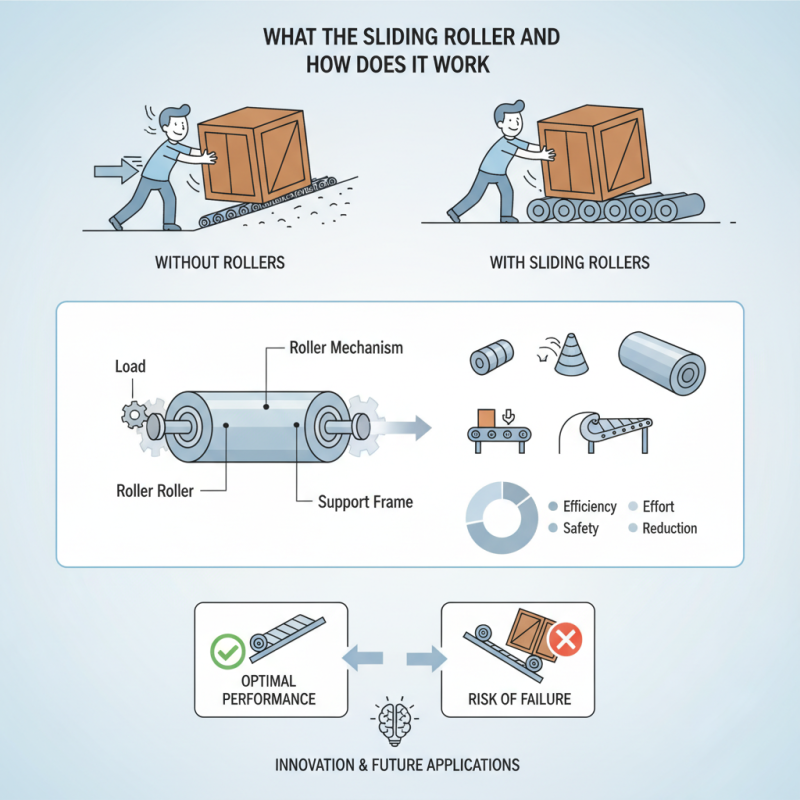
What is a Sliding Roller?
A sliding roller is an innovative component commonly used in various mechanical applications. It is designed to facilitate movement and reduce friction between surfaces. By employing a set of rollers, this component enables smooth motion, which is essential for machinery efficiency. In fact, according to industry reports, up to 30% of energy consumption in manufacturing can be attributed to friction. Thus, integrating sliding rollers can significantly lower energy costs.
In various industries, from construction to manufacturing, sliding rollers promote operational efficiency. They can support substantial loads while minimizing wear and tear on machinery. However, not all sliding rollers are created equal. Material quality and design must be carefully considered. Poorly designed rollers can lead to increased maintenance needs and unexpected breakdowns. This can disrupt operations, causing delays and financial losses.
Data shows that the global sliding roller market is projected to grow by 4.5% annually over the next five years. This growth reflects an increasing demand for efficient movement solutions. As industries evolve, the importance of reliable sliding roller systems will only rise. Companies must assess their requirements and invest in quality solutions. Overlooking this could result in operational inefficiencies that are costly in the long run.
Sliding Roller Usage in Different Industries
This chart illustrates the usage of sliding rollers across various industries, highlighting their importance in automotive, construction, manufacturing, aerospace, and electronics sectors.
The Basic Components of a Sliding Roller
A sliding roller is a simple yet effective mechanism used in various applications. It consists of a few essential components. The main part is the roller itself, typically made from durable materials. This roller allows for smooth movement along a predefined path. The base holds the roller in place, ensuring stability during operation.
The bearing is another critical component. It reduces friction between the roller and the surface. This reduction in friction enhances performance. Additionally, the frame supports the entire structure. It's important for alignment and durability. Sometimes, people forget to check the alignment. Misalignment can lead to operational inefficiencies and increased wear.
Another detail often overlooked is maintenance. Regular cleaning and lubrication are necessary. Dust and debris can hinder the roller's movement. Neglecting this can lead to failure over time. Users should be mindful of the surrounding environment. An outdoor setting often brings extra challenges. Consistent checks will improve the roller's lifespan and operation.
How Sliding Rollers Function Mechanically
Sliding rollers are fascinating mechanical devices. They allow smooth movement and reduce friction in various applications. These components are often found in conveyor systems, sliding doors, and heavy machinery. By understanding their mechanical function, we can appreciate their design and utility.
The mechanics of sliding rollers is simple yet effective. They consist of a cylindrical design that rotates around a central axis. When a load is applied, the roller spins to facilitate movement. This motion minimizes resistance and promotes efficiency. However, not all designs work perfectly. Sometimes, dust and debris can accumulate, hindering their operation. Regular maintenance is essential, though it can be overlooked.
Different materials affect performance too. Metal rollers offer strength but can corrode over time. Plastic rollers are lightweight, yet they may wear down under heavy loads. Finding the right balance is crucial in optimizing functionality. Sometimes, users underestimate the impact of poor material choices or inadequate maintenance. These oversights can lead to unexpected failures. Understanding their function is the first step toward effective usage.
What is a Sliding Roller and How Does it Work? - How Sliding Rollers Function Mechanically
| Component | Material | Function | Typical Applications |
| Inner Cylinder | Steel | Houses the rolling mechanism | Industrial machinery |
| Roller | Polymer / Metal | Reduces friction and allows smooth movement | Conveyor systems |
| Outer Casing | Aluminum | Protects internal components | Automotive assemblies |
| Bearing | Stainless Steel | Supports rotating parts | Construction equipment |
| Guide Rail | Steel | Ensures proper alignment | Material handling |
Applications of Sliding Rollers in Various Industries
Sliding rollers are versatile components widely used across various industries. They facilitate smooth movement and reduce friction. In manufacturing, sliding rollers support heavy machinery, allowing for efficient operation. They help with the assembly line, ensuring that products move seamlessly from one stage to another.
In the transportation sector, sliding rollers are crucial for loading and unloading cargo. They enhance the movement of goods on conveyor belts. Factories often install rollers to streamline logistics. However, maintaining these rollers is essential for optimal performance. Worn-out components can slow down operations.
In the textile industry, sliding rollers aid fabric movement during production. They help reduce snags and tangles, ensuring quality output. Yet, improper installation may lead to misalignment. This can cause delays and increased costs. Industries rely heavily on these simple but effective tools, but even minor oversights can have significant consequences.
Benefits and Limitations of Using Sliding Rollers
Sliding rollers offer several advantages in various applications. They enable smooth, efficient movement across surfaces. This efficiency is particularly beneficial in manufacturing and assembly lines. By reducing friction, sliding rollers can enhance productivity and speed. Users enjoy less wear on machinery. Maintenance becomes easier with fewer broken components.
However, sliding rollers also have limitations. They may struggle on uneven surfaces, leading to instability. This can result in wear and tear, affecting their lifespan. Additionally, sliding rollers may not work well in environments with heavy loads. Their effectiveness diminishes under extreme conditions. Users should consider these factors before implementation.
Finding the right balance between benefits and limitations is crucial. Some applications may require heavy-duty alternatives. Regular assessments can help identify issues. Users need to ensure that sliding rollers meet specific needs. Knowing when to reconsider your approach can prevent future problems.