What is Nichrome Flat Wire and Its Applications in Industries?
Nichrome Flat Wire is a unique alloy that combines nickel and chromium. This specific composition provides excellent resistance to heat and corrosion. Industries widely utilize Nichrome Flat Wire in applications requiring high durability and reliability. Its structure allows it to maintain performance under extreme conditions.
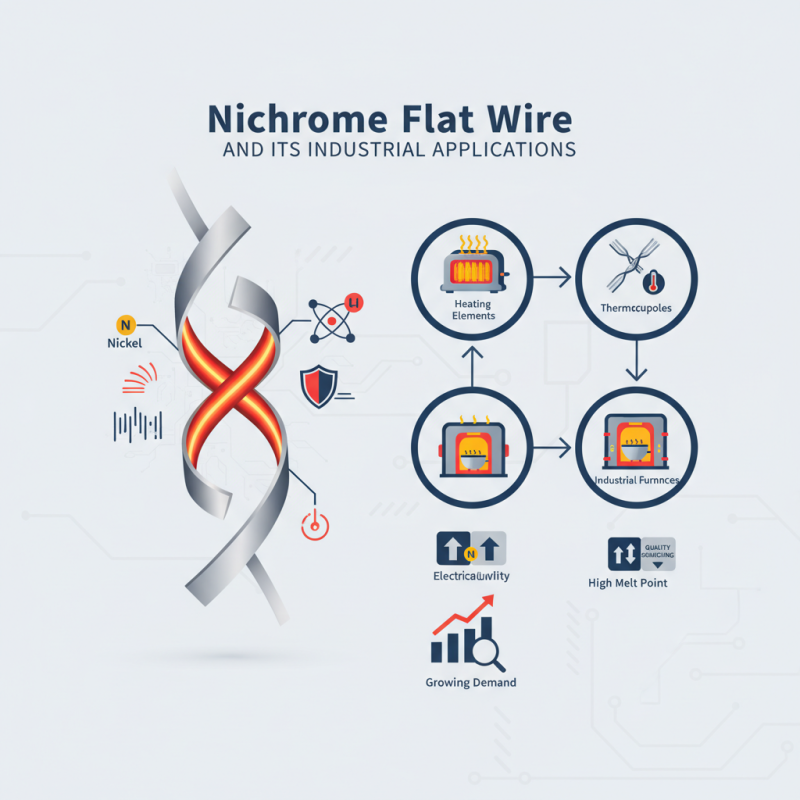
This versatile material is often used in heating elements, thermocouples, and industrial furnaces. Many manufacturers depend on Nichrome Flat Wire for its electrical conductivity and high melt point. The wire is essential in creating stable and long-lasting heating solutions. However, while its benefits are clear, users must also consider potential limitations. For instance, careful handling is necessary to avoid breakage during processing.
As industries evolve, the demand for Nichrome Flat Wire continues to grow. Researchers and engineers are exploring new applications that leverage its unique properties. Yet, potential users must ensure they source quality materials. Not all Nichrome Flat Wire is created equal. Ensuring its quality and reliability can pose a challenge. Trustworthy suppliers are imperative for success in using Nichrome Flat Wire effectively.
What is Nichrome Flat Wire?
Nichrome flat wire is an alloy primarily made of nickel and chromium. This wire is notable for its high resistance to heat and corrosion. Typically, it contains about 80% nickel and 20% chromium, which contributes to its longevity. Industries widely use this wire as a heating element in toasters, hair dryers, and industrial furnaces. Its ability to withstand high temperatures makes it invaluable in settings where durability is essential.
An interesting report from the International Energy Agency highlights that the demand for Nichrome wire in industrial applications is expected to rise significantly. The growth is driven by advancements in heating technology and the push for more efficient energy solutions. Nichrome flat wire, due to its unique properties, offers a compelling choice for various thermal applications.
Tips: When selecting Nichrome flat wire, consider the temperature requirements of your application. Understanding the specific gauges and resistances is crucial. Moreover, always ensure proper insulation to maximize safety and efficiency during use. Keep in mind that while Nichrome wire is durable, its performance can vary based on exposure to certain environments. Regular assessments of wire condition can help maintain optimal functionality.
Properties of Nichrome Flat Wire
Nichrome flat wire is gaining traction in various industries. Its unique properties make it ideal for a range of applications. Comprised mainly of nickel and chromium, this alloy exhibits excellent resistance to oxidation and high temperatures. Reports indicate that nichrome can withstand temperatures up to 1,200°C without losing its integrity. This makes it valuable for environments that experience extreme conditions.
The wire's electrical resistance is another notable feature. With a resistivity of approximately 1.10 μΩ·m, nichrome flat wire is often used in heating elements. Industries utilize this property to produce electric heaters and toasters. While these applications are common, the durability and longevity of nichrome can vary. Factors like exposure to humidity and the presence of contaminants can affect its performance.
Diverse applications also include use in resistance wire and thermocouples. The versatility of nichrome flat wire offers solutions in manufacturing processes, including 3D printing. However, it is essential to regularly assess its performance to ensure optimal function. Industry practices emphasize monitoring conditions to extend the lifespan of nichrome wire in various settings.
What is Nichrome Flat Wire and Its Applications in Industries? - Properties of Nichrome Flat Wire
| Property | Value | Application |
| Resistivity | 1.10 x 10⁻⁶ Ω·m | Heating elements |
| Melting Point | 1400°C | Industrial heaters |
| Thermal Conductivity | 35.5 W/m·K | Welding |
| Density | 8.4 g/cm3 | High-temperature applications |
| Corrosion Resistance | Good | Aerospace components |
Common Industries Using Nichrome Flat Wire
Nichrome flat wire has found its place across various industries due to its unique properties. This material, composed of nickel and chromium, offers excellent resistance to oxidation and heat. Because of these characteristics, industries that require durable and efficient heating elements frequently use nichrome flat wire.
One common application is in the electric heating sector. Nichrome flat wire is often utilized in manufacturing heating elements for toasters, hair dryers, and space heaters. The wire’s ability to withstand high temperatures makes it ideal for these products. Additionally, the aerospace industry relies on nichrome flat wire for its heat resistance and lightweight properties. Engineers value nichrome for components in turbine engines and other critical systems.
In food processing, nichrome flat wire is used in equipment for cooking and heating. Its chemical stability ensures safety in environments where food is processed. Some manufacturers, however, face challenges in sourcing reliable materials. Quality control remains a concern for those using nichrome flat wire. Addressing these issues can enhance the effectiveness of products in industries that depend on this powerful alloy.
Applications of Nichrome Flat Wire in Heating Elements
Nichrome flat wire, an essential material in many industries, is widely recognized for its high resistance and durability. In heating elements, this alloy of nickel and chromium provides efficient thermal performance. Its unique composition allows it to withstand high temperatures without losing structural integrity. Reports indicate that nichrome flat wires can operate effectively at temperatures exceeding 1,200 °C.
One prominent application of nichrome flat wire is in electric heaters. These devices rely heavily on the wire's ability to convert electrical energy into heat efficiently. According to industry data from market research, the demand for nichrome in heating applications has surged by over 25% in the past three years. Manufacturers appreciate its reliability and longevity, particularly in demanding environments. However, some challenges remain. The wire can be prone to oxidation if not properly insulated, potentially impacting its longevity.
In industrial furnaces and specialized machinery, nichrome flat wire serves as a critical heating element. Its ability to maintain consistent temperatures under varying conditions is paramount. Despite its effectiveness, the cost of nichrome relative to other materials can pose a barrier for some manufacturers. It's crucial to weigh the benefits against the financial implications in these applications. Proper installation and maintenance are necessary to maximize its potential.
Advantages of Nichrome Flat Wire over Other Materials
Nichrome flat wire is gaining popularity in various industries due to its unique properties. One of its main advantages is its excellent resistance to high temperatures. This feature allows it to perform reliably in environments where other materials may fail. For instance, in heating elements, nichrome remains stable, ensuring longevity and efficiency. Industries that require durability in extreme conditions often turn to nichrome flat wire.
Another significant benefit is its resistance to oxidation. Nichrome can withstand exposure to air without deteriorating. This characteristic is crucial in applications like furnaces and thermocouples. The wire maintains its integrity even after prolonged usage. While it is not the cheapest option, its long-term performance often offsets the initial cost.
On the downside, working with nichrome requires specific skills. Its hardness can make fabrication challenging for some manufacturers. This complexity can lead to increased production times. Nevertheless, the long-term benefits outweigh these hurdles, making it a preferred choice in sectors where reliability is paramount. The industrial reliance on nichrome flat wire demonstrates its value, even as businesses continue to explore alternatives.