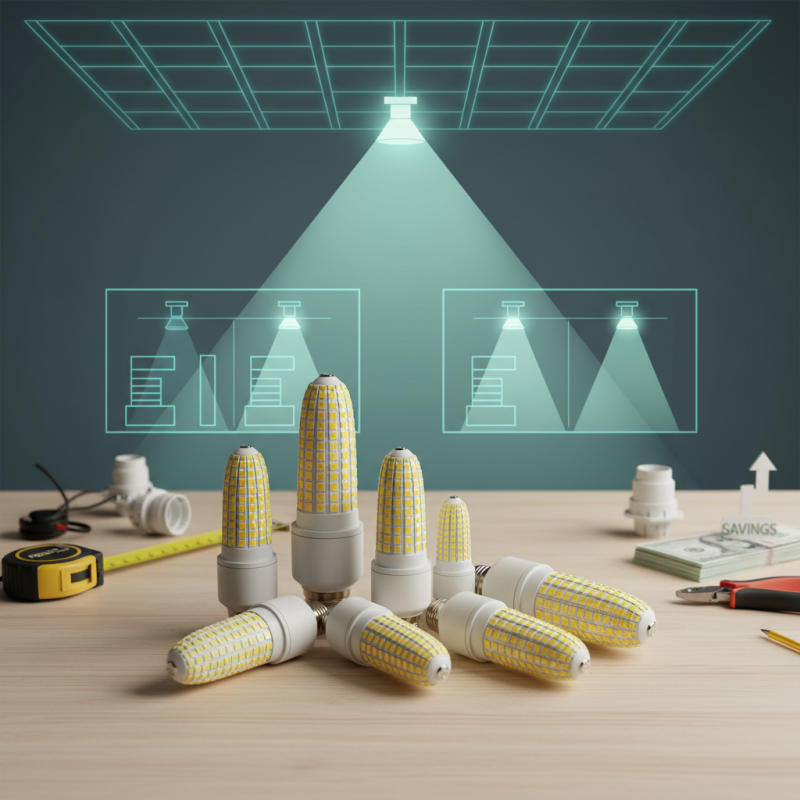
Top LED Corn Light Bulb Tips for Maximizing Efficiency?
The LED Corn Light Bulb has gained immense popularity in recent years. Its energy-efficient design provides a practical solution for various lighting needs. As more people choose this innovative technology, maximizing its efficiency becomes essential.
Understanding how to properly utilize the LED Corn Light Bulb can enhance its performance. Factors like placement and wattage play a critical role. Many users often overlook these details. They may not realize that optimal positioning can significantly improve light distribution and reduce energy waste.
Some might hesitate to invest in high-quality options. However, the long-term savings and benefits far outweigh the initial costs. It is essential to reflect on choices and their impact on efficiency. By applying these tips, users can ensure they gain the most from their LED Corn Light Bulb investments.
Understanding LED Corn Light Bulbs: Definition and Benefits
LED corn light bulbs are a revolutionary lighting solution. They offer significant benefits over traditional incandescent and fluorescent lamps. Their unique design resembles corn cob shapes, which allows for a wide beam angle and even illumination. According to the U.S. Department of Energy, LED bulbs can be up to 80% more efficient than traditional incandescent bulbs. This efficiency leads to lower energy costs and a longer lifespan.
When using LED corn light bulbs, energy management is key. Ensure your fixtures are compatible with LED technology to maximize performance. Opting for dimmable features can increase savings. Many users have found that integrating smart lighting control helps them manage usage effectively. For example, a report by the Energy Efficiency Research Group highlighted that households adjusted lighting patterns, saving up to 30% on energy costs.
Consider placement and height to maximize effectiveness. Proper positioning can enhance light distribution. Regular cleaning of bulbs ensures optimal brightness. However, it’s worthwhile to note that not all LED bulbs perform equally in all environments. Testing different types can reveal which works best for your specific needs. Balancing these factors can lead to a more efficient lighting system.
Factors Affecting Efficiency in LED Corn Light Bulbs
When choosing LED corn light bulbs, several factors influence their efficiency. One crucial aspect is the lumen output per watt. Higher lumen output means more light with less energy consumption. Look for bulbs with good lumen ratings that match your specific lighting needs. A well-designed bulb will project light effectively, minimizing wasted energy.
Another important factor is the color temperature. Different color temperatures can affect the perceived brightness. Warmer light (3000K) gives a cozy feel, while cooler light (5000K) feels bright and energetic. Choosing the right temperature impacts not only aesthetics but also energy savings in various settings.
Consider these tips: ensure proper fixture compatibility. Mismatched fixtures can lead to inefficiency. Placement also matters; avoid dark spots by positioning bulbs strategically. Regular maintenance improves performance, so keep your fixtures clean. These adjustments may require initial effort, but the long-term benefits in energy savings and efficiency are significant.
Top LED Corn Light Bulb Tips for Maximizing Efficiency
Optimal Wattage Selection for Maximum Performance
When selecting LED corn light bulbs, optimal wattage is crucial for achieving maximum performance. Each environment requires a specific wattage to illuminate effectively. Overly high wattage may waste energy and increase costs. On the flip side, using bulbs with insufficient wattage results in poor lighting. This balance is vital for both efficiency and comfort.
For general applications, 15 to 25 watts can be ideal for standard lighting. In contrast, locations needing brighter illumination may benefit from 30 to 50 watts. Assessing the space is necessary. Consider ceiling height and room size. Does the current lighting meet your needs? If not, adjustments are needed.
Using a dimmer switch can enhance flexibility. It allows users to adjust brightness based on the time of day or activity. However, ensure dimmers are compatible with LED bulbs. This can avoid flickering or reduced bulb lifespan. Experimentation with different wattages and settings can lead to insights, fostering a more efficient lighting solution in the long run.
Top LED Corn Light Bulb Tips for Maximizing Efficiency
| Wattage | Lumen Output | Efficiency (lm/W) | Best Use Case |
| 15W | 1500 lm | 100 lm/W | Home Lighting |
| 30W | 3000 lm | 100 lm/W | Small Retail |
| 50W | 5000 lm | 100 lm/W | Warehouse Lighting |
| 75W | 7500 lm | 100 lm/W | Large Outdoor Areas |
| 100W | 10000 lm | 100 lm/W | Industrial Lighting |
Importance of Color Temperature and Lumen Output
Choosing the right color temperature for LED corn light bulbs is crucial. Color temperature affects how light appears in a space. Warm light, around 2700K to 3000K, creates a cozy atmosphere. In contrast, cool light around 5000K to 6500K can enhance focus and alertness. Each option serves different purposes in home or business settings.
Lumen output should also be a priority. It measures brightness, guiding your selection. A higher lumen count means brighter light. For effective illumination, consider the area you're lighting. For instance, a 1500 lumen bulb can brighten a garage efficiently. However, using too bright a bulb in a small room can be uncomfortable. Balancing these factors might seem tricky, but it ensures that your space feels inviting and functional.
Best Practices for Installation and Maintenance of LED Corn Lights
When installing LED corn light bulbs, choosing the right fixtures is essential. Ensure the fixtures are compatible with the bulb’s specifications. A mismatched fixture can lead to poor light output and reduced efficiency. Proper wiring is also crucial; faulty connections can create flickering lights or even damage the bulbs. Always follow the manufacturer’s installation guidelines, even if they seem overly detailed.
Maintenance plays a significant role in extending the life of LED corn lights. Regularly check for dust and debris accumulation. A simple wipe with a damp cloth can enhance brightness. It’s also important to monitor the lumens output. If the light diminishes over time, it may indicate a need for replacement. Sometimes, people ignore physical signs of wear. This can lead to performance issues and increased energy costs.
Finally, consider the environment where these lights are used. In dusty or humid areas, extra precautions might be needed to protect the bulbs. Making sure they stay clean and dry can significantly boost their lifespan. Many overlook these details, but they are key to maximizing efficiency. Small adjustments can lead to significant improvements.