Top 10 High Speed Inspection Machines You Should Know About
In the realm of high-speed production, the role of a High Speed Inspection Machine is pivotal. Dr. Alan Porter, a prominent expert in industrial automation, once stated, “Quality assurance in manufacturing begins with robust inspection technology.” His words resonate deeply in today's fast-paced environment.
High Speed Inspection Machines have revolutionized how industries ensure quality. These machines can operate at remarkable speeds while maintaining precise accuracy. This blend of speed and precision is essential in sectors like electronics, pharmaceuticals, and automotive manufacturing. Companies increasingly rely on these machines to catch defects early.
Yet, the adoption of these technologies is not without issues. Some industries struggle with integration challenges. Others find it hard to train staff on new systems. Continuous improvement is crucial. High Speed Inspection Machines are vital, but the journey toward flawless quality assurance needs ongoing reflection and adjustment.
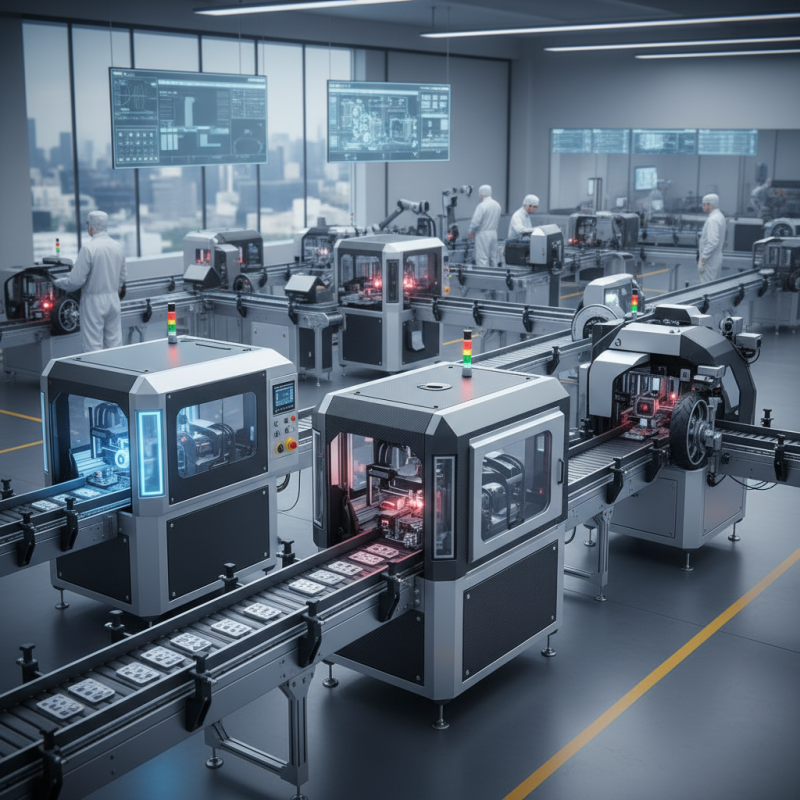
Understanding High Speed Inspection Machines
High-speed inspection machines are revolutionizing quality control in various industries. These machines use advanced technology to detect defects quickly and efficiently. They can identify various issues, such as dimensional inaccuracies and surface flaws. By employing cameras and sensors, they capture images at great speeds. Operators can analyze these images in real-time.
However, not all inspection machines can handle a high volume of products. Some may struggle with accuracy when faced with rapid inspection demands. It’s essential to select devices that maintain both speed and precision. Reflections and lighting changes can affect image quality. This necessity for adjustment is often overlooked. Regular maintenance is crucial to ensure optimal performance.
Incorporating high-speed inspection machines into production lines comes with challenges. Workers must be trained to operate these systems. There’s a learning curve associated with new technologies. Without sufficient training, operators might miss critical defects. Balancing speed with thorough inspections remains an ongoing concern in the field. Finding the right technology requires careful consideration and continuous evaluation.
Key Features to Look for in Inspection Machines
When selecting high-speed inspection machines, several key features stand out. Speed is essential. Machines must handle large volumes without compromising accuracy. Recent reports indicate that companies lose up to 20% efficiency due to slow inspection processes. Hence, finding a machine with optimal throughput is crucial.
Another vital aspect is adaptability to different materials. Some machines excel with rigid components, while others handle flexible materials better. Flexibility can increase a machine's utility across varied production lines. This versatility is critical, especially in dynamic manufacturing environments.
Image resolution is another factor to consider. Higher resolution leads to more precise defect detection. According to industry studies, 90% of defects can be identified with resolutions above 0.5 microns. However, achieving such clarity often requires advanced technology, which can increase costs. Balancing quality and budget is a constant challenge.
Finally, user-friendly interfaces can make a significant difference. Operators should easily navigate and adjust settings. Complicated machine controls can lead to mistakes. A straightforward design can enhance efficiency but may require simplifications that need re-evaluation during implementation.
Top 10 High Speed Inspection Machines Overview
High-speed inspection machines are essential in today's fast-paced manufacturing environments. They enhance efficiency and quality control by rapidly analyzing products as they move along the production line. These machines can detect defects, ensuring that only high-quality items reach consumers. Some systems utilize advanced imaging technology, while others rely on laser measurements. Each method has its advantages and challenges.
One critical aspect of these machines is calibration. Poor calibration leads to inaccuracies. Operators must regularly check alignment and precision. Moreover, high-speed inspection systems often involve substantial investment. Companies must assess the balance between cost and efficiency. Understanding maintenance needs is vital, as downtime can negate savings. Training staff to operate these machines is equally important. Despite their sophistication, human oversight remains crucial to avoid errors. Successful integration requires ongoing evaluation and adaptation.
Applications of High Speed Inspection Technology
High-speed inspection technology is transforming various industries. It plays a crucial role in quality control, ensuring products meet stringent standards. According to a recent market analysis, the global inspection machines market is projected to grow by 15% annually. This growth is driven by the rising demand for efficiency and accuracy.
In the food industry, high-speed inspection machines are vital for detecting contaminants. These machines can process thousands of products per minute. Studies show that implementing these systems reduces defects by up to 30%. However, there are challenges. Training staff to effectively use and maintain these machines is essential, yet often overlooked.
In the pharmaceutical sector, speed isn't just about efficiency; it’s also about safety. High-speed inspection can identify visual defects that manual inspection might miss. Reports indicate that up to 20% of products could fail visual checks. This creates critical issues that need addressing. Regular calibration and updates to the technology are necessary but can be costly. Industry professionals must continually evaluate the balance between speed and thoroughness to optimize quality.
Future Trends in High Speed Inspection Machines
The landscape of high-speed inspection machines is evolving rapidly. Industry reports indicate that the market for these machines is anticipated to grow at a compound annual growth rate (CAGR) of 7.5% through 2025. This growth is driven by the need for increased efficiency and precise quality control in manufacturing sectors such as electronics and food processing.
Future trends highlight the integration of artificial intelligence and machine learning. These technologies enable machines to learn from data, improving inspection accuracy over time. According to a recent study, AI-powered inspection systems achieve up to 98% accuracy in detecting defects. However, challenges remain in training these systems adequately, leading to potential errors in judgment.
Furthermore, there is a shift towards more compact and versatile machines. Companies aim to save space without compromising on speed or reliability. New designs often incorporate modular components that allow easy upgrades. While this looks promising, adaptability can sometimes lead to compatibility issues, requiring ongoing revisions and updates. These concerns reflect a budding need for better standards and best practices in high-speed inspection technologies.