Top Forklift Collision Detection Systems for Safer Operations?
Forklifts are essential in many industries, but they come with risks. The potential for collisions can be serious, leading to injuries and property damage. A Forklift Collision Detection System (FCDS) can significantly enhance safety. These systems use advanced technology to detect obstacles and prevent accidents.
Many companies are now adopting FCDS to improve their safety measures. They utilize sensors and cameras that monitor the forklift's surroundings in real-time. This technology can alert operators to potential hazards, allowing them to react swiftly. However, not all systems are created equal. Some may lack the necessary features or reliability.
Investing in a high-quality Forklift Collision Detection System is crucial. It can protect employees and assets while promoting a safer work environment. Still, companies must continuously assess the effectiveness of their systems. Regular maintenance and updates are necessary for optimal performance. Safety should always be a top priority in forklift operations.
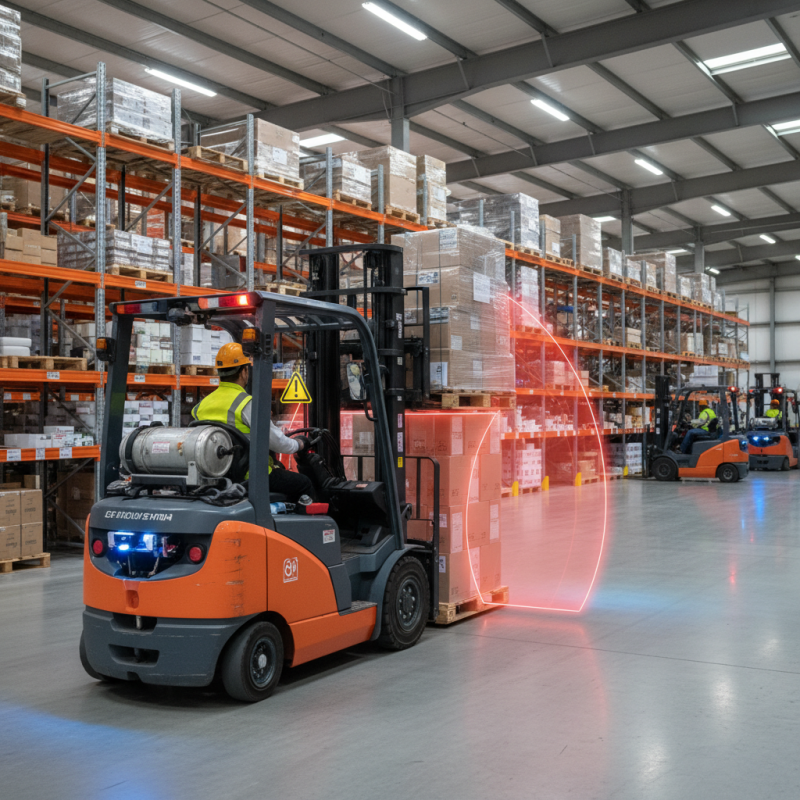
Overview of Forklift Collision Detection Systems
Forklift collision detection systems are essential for improving workplace safety. These advanced technologies help prevent accidents in busy environments. They use sensors and cameras to monitor surroundings. When a potential collision is detected, alarms alert operators. This immediate feedback can save lives and reduce damage.
The effectiveness of these systems depends on their design and implementation. Some systems may not detect all obstacles. They might struggle in low-light conditions or with complex layouts. Regular maintenance and updates are crucial to their functionality. Operators must also receive training to understand the technology. This training helps ensure they can react quickly in emergencies.
Awareness of limitations is important. Not every collision can be avoided, but these systems significantly lower risks. Companies should evaluate their needs before selecting a system. Customization can address specific challenges within their operations. Investing in the right technology can lead to a safer work environment for everyone.
Key Technologies Used in Collision Detection for Forklifts
Collision detection systems are crucial for enhancing forklift safety. These systems leverage various technologies to minimize accidents in busy warehouse environments. There are several key technologies employed in these systems. Proximity sensors are widely used to detect nearby obstacles and alert operators in real time. They can sense objects within a certain range and provide immediate feedback.
Another important technology is vision-based systems. These systems utilize cameras and artificial intelligence to analyze the surrounding area. They can identify people, equipment, and other hazards. The integration of machine learning allows these systems to adapt over time. They improve accuracy as they learn from past incidents.
In addition, some collision detection systems feature GPS tracking. This technology helps operators maintain awareness of their location within the facility. By mapping the warehouse layout, it can predict potential collision points. While these systems greatly enhance safety, challenges remain. Not all environments can fully accommodate such technologies. Warehouse layouts can be complex. Thus, regular assessments are necessary to optimize system performance.
Benefits of Implementing Collision Detection Systems
Investing in collision detection systems for forklifts can significantly enhance safety measures within warehouses and industrial settings. These systems help prevent accidents by using sensors and alarms to detect potential collisions. The real-time alerts allow operators to take immediate actions, reducing the likelihood of injuries.
Statistics reveal that a large percentage of workplace accidents are related to vehicle collisions. Implementing these systems can lower accident rates. As a result, companies often see fewer disruptions and lower insurance costs. Additionally, employees feel safer, which can boost morale and productivity. Regular training for operators on the system’s functions is also vital.
Tips for effective implementation include ensuring all employees understand how these systems operate. Regular maintenance checks can prevent system failures. Also, consider feedback from operators for system adjustments. Evaluating how these changes affect safety can lead to ongoing improvements. Investing in collision detection technology can yield long-lasting benefits not only for safety but also for overall operational efficiency.
Challenges in Forklift Collision Avoidance Solutions
Forklift operations involve inherent risks, especially collisions. These incidents can lead to severe injuries and property damage. Therefore, understanding the challenges in forklift collision avoidance solutions is critical for enhancing workplace safety.
One of the primary challenges is integrating technology into existing systems. Many companies struggle with adapting new collision detection systems into their workflows. Resistance from employees unfamiliar with technology can also hinder implementation. There are gaps in staff training that need addressing. Fostering a culture of safety awareness is essential, but it requires continuous effort.
Tip: Regular training sessions can help staff engage with new technologies effectively. Furthermore, integrating feedback mechanisms allows employees to voice their concerns.
Another challenge is the environment in which forklifts operate. Often, warehouse layouts are tight, limiting visibility. Compounding this issue is the presence of pedestrians and other machinery, creating a chaotic landscape. Collision detection systems must be adaptable to various conditions, which can be challenging.
Tip: Conducting regular risk assessments can help identify potential hazards before they escalate. Applying a proactive approach to safety ensures that solutions evolve with the environment.
Future Trends in Forklift Safety Technology
The landscape of forklift safety technology is evolving rapidly. Businesses are increasingly focused on reducing workplace accidents. Emerging trends prioritize real-time data and enhanced communication systems. New sensors and cameras are vital for collision detection. They help prevent accidents by alerting operators to potential hazards.
Today’s systems incorporate artificial intelligence. This technology learns patterns and adapts to various environments. Machine learning algorithms improve over time, identifying areas of risk. Forklifts equipped with these advanced systems can operate more safely. Furthermore, wearable technology is gaining traction among operators. Smart vests and helmets provide immediate feedback and monitor health status.
Despite these advancements, challenges remain. There can be a gap between technology implementation and user training. Operators may struggle to adapt to new systems, leading to potential safety risks. Regular training and updates are essential for optimizing these technologies. The future of forklift safety depends on continuous improvement and collaboration between technology developers and end-users.