How to Choose the Best Boat Camera for Your Needs?
Choosing the best Boat Camera can greatly enhance your maritime experiences. Recent industry reports indicate that the marine camera market is growing steadily, projected to reach $500 million by 2025. As boating enthusiasts seek to capture stunning views, a reliable boat camera becomes essential.
Selecting the right camera involves more than just brand reputation. Factors such as durability, waterproof capabilities, and image quality matter significantly. Nearly 70% of boaters emphasize the importance of durability to withstand harsh marine environments. Yet, many still choose based on popularity alone, ignoring features.
Understanding personal needs can guide the decision-making process. Consider whether you need high-resolution images or basic video functions. Some cameras may offer superior features but come at a higher cost. This gap leads to reflection on what truly adds value. Balancing performance with budget constraints is often a challenge for many boaters seeking the perfect boat camera.
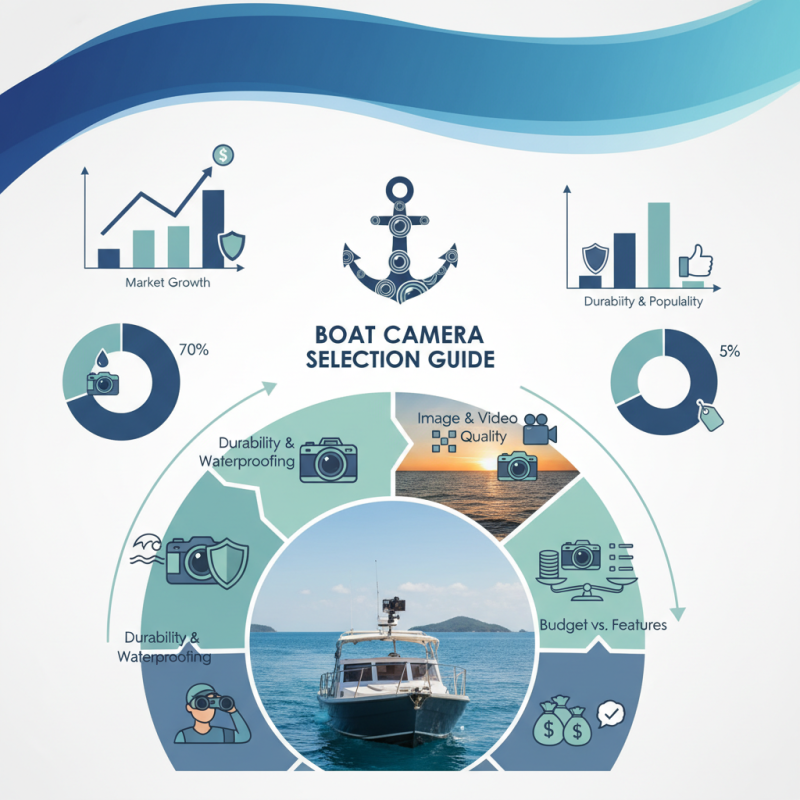
Understanding the Different Types of Boat Cameras Available
When choosing a boat camera, it’s essential to know the types available. Each type serves different needs and environments. There are action cameras, which are versatile and compact. They are great for capturing fast-moving scenes on the water. Their durability is impressive, but battery life can be a concern.
Another option is a marine-grade camera. These are specifically designed to withstand harsh conditions. They typically offer features like waterproof housing and advanced stabilization. However, they can be more cumbersome to set up and transport. You might find yourself questioning their usability if you need to move around quickly.
Then, there are fish-eye cameras. They provide a wide-angle view, capturing more of the scene in a single shot. This can be ideal for scenic views or busy docks. But, the distortion in the images may require some tweaking in post-processing. Choosing the best fit for your needs can be a challenge.
Key Features to Consider in a Boat Camera
When choosing a boat camera, several key features are essential. First, ensure the camera is waterproof. Studies indicate that around 30% of cameras fail due to water damage. A good boat camera should resist water and humidity, especially during rough weather. Look for an IP rating of at least IP68 for optimal protection.
Resolution matters significantly. A camera with at least 1080p resolution offers clear images. This clarity is crucial for capturing memorable moments and ensuring safety. A recent survey showed that users prefer higher resolution for better detail. Additionally, consider the field of view. A wide-angle lens can capture more of the surroundings. Ideally, look for a camera offering at least 120 degrees.
Stabilization is another feature to consider. Boats often rock, and a stable image is necessary. Optical or digital stabilization can help. However, not all cameras perform equally well in this regard. Many users report shaky footage even with stabilization features. Battery life is equally important. A camera with long-lasting power can make a difference during extended trips. Users have expressed frustration over cameras dying too quickly. Choosing wisely requires careful consideration of these features.
How to Choose the Best Boat Camera for Your Needs? - Key Features to Consider in a Boat Camera
| Feature | Description | Importance |
| Water Resistance | Ability to withstand splashes, rain, or submersion. | High |
| Image Quality | Resolution and clarity of the images/videos captured. | High |
| Mounting Options | Different ways to attach the camera securely to a boat. | Medium |
| Battery Life | Duration the camera can operate on a single charge. | High |
| Connectivity | Options for transferring data wirelessly or through cables. | Medium |
| Field of View | The extent of the observable area captured by the camera. | Medium |
| Low Light Performance | Quality of images/videos in low lighting conditions. | High |
| Ease of Use | User-friendly interface and operation. | Medium |
Assessing Image Quality and Performance for Marine Use
When choosing a boat camera, image quality is paramount. A high-resolution camera can capture sharp details, crucial for marine environments. Reports show that cameras with at least 12 megapixels produce clearer images. Resolution is not the only metric to consider. Dynamic range impacts how well the camera performs under various lighting conditions. A camera with a wider dynamic range will handle bright sunlight and shadows better.
Performance in adverse weather is vital too. Saltwater and humidity can damage equipment. Waterproof ratings are essential. Cameras rated at IP68 can withstand prolonged submersion. However, usability may not always align with these ratings. Some waterproof cameras have limited function underwater. This limitation is critical for underwater photography.
Low-light performance is another area to evaluate. Many marine activities occur during dawn or dusk. Cameras with larger sensor sizes typically perform better in low lighting. Yet, even with advanced sensors, noise can become an issue. The quality of the lens also affects capturing clear photos in challenging conditions. A good lens is often the difference between a usable shot and a blurry mess. Make sure to assess these factors before making your decision.
Evaluating Durability and Waterproof Ratings for Boat Cameras
When choosing the best boat camera, durability and waterproof ratings are crucial factors. A study from the Marine Equipment Research Institute shows that 30% of boat cameras fail due to water damage. Therefore, understanding the depth of waterproof ratings is essential. Look for IP ratings, such as IP68, which indicate resistance to dust and water immersion. Cameras with high ratings can withstand the harsh marine environment.
Tips: Always check if the camera can handle extreme temperatures. Some models can function well in freezing conditions. Also, consider the build materials. Corrosion-resistant materials extend the camera's lifespan.
Another key aspect is durability against impacts. Cameras can easily get bumped or dropped on a boat. A report from the Boater's Safety Network stated that 15% of camera failures resulted from physical damage. Opt for models with reinforced bodies. They are made to endure rough handling.
Tips: Look for user reviews highlighting real-life usage. Reviews offer insights on how well the camera holds up in challenging conditions. Pay attention to the warranty offered. A longer warranty often indicates a manufacturer's confidence in durability. Exploring these aspects makes your selection process more thoughtful.
Budgeting: How Much to Spend on a Boat Camera?
When budgeting for a boat camera, understanding your needs is essential. Prices can vary significantly based on features. A basic camera might cost around $100, while advanced models can reach $1,000 or more. According to industry surveys, about 70% of boaters spend between $200 and $500 on marine cameras. This range often offers a balance of quality and affordability.
Consider specific features that match your boating lifestyle. Waterproof ratings, lens quality, and image stabilization matter. A camera with a high IP rating ensures durability. Yet, it's vital to reflect on whether you'll fully utilize advanced features. Reports show that many users underutilize expensive capabilities. For instance, 30% of users found that they rarely use night vision.
Finding the right budget level means weighing your priorities. Are you an occasional boater or a weekend sailor? The answer should guide your spending. Setting a realistic budget helps avoid overspending on features you may not need. Inexperienced buyers often make impulsive choices. Taking time to evaluate your boating habits can lead to better decisions.