How to Choose the Right Intrinsically Safe Blower Fan?
Selecting the right Intrinsically Safe Blower Fan is crucial for safety and efficiency. In hazardous environments, these fans prevent ignition sources. They are designed to operate securely, minimizing risks in flammable areas. Understanding the unique features of these fans will aid in your decision-making process.
Choosing an Intrinsically Safe Blower Fan requires knowledge and experience. Consider factors like airflow capacity, pressure, and noise levels. Each application demands specific characteristics. Investing time in research can save future troubles. Do not overlook the importance of certifications and compliance with industry standards.
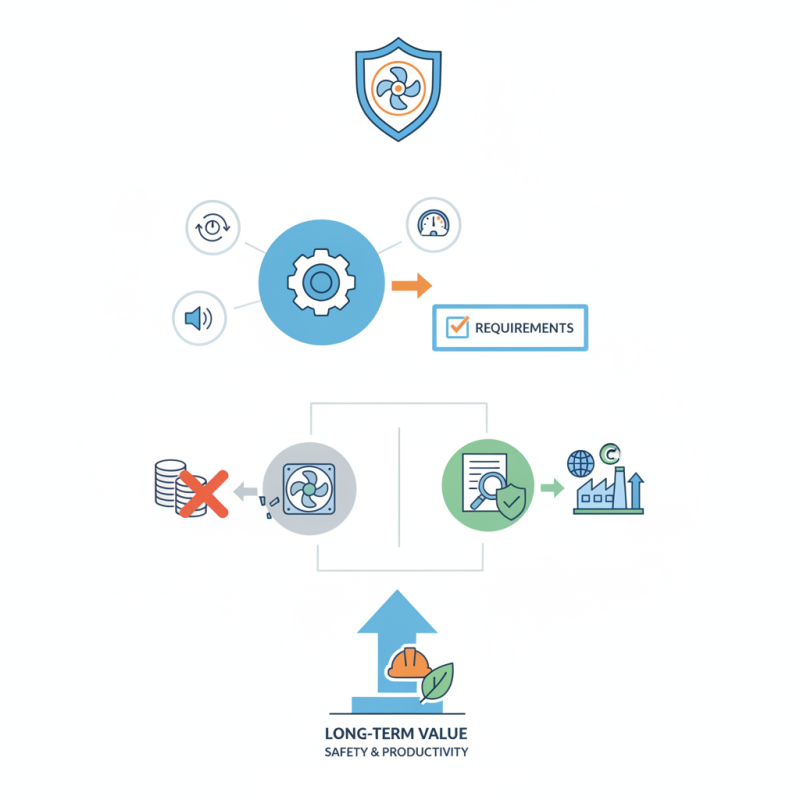
Many buyers make hasty decisions influenced by price alone. However, a cheaper fan may lead to safety risks or operational failures. Reflect on your requirements before making a choice. The right fan will enhance productivity and ensure safety. Focus on long-term value rather than immediate savings.
Understanding Intrinsically Safe Equipment in Hazardous Environments
In hazardous environments, understanding intrinsically safe equipment is crucial. These devices are designed to prevent ignition in potentially explosive atmospheres. This safety feature is vital in industries like mining, oil and gas, and chemical processing. Each setting presents unique challenges, and selecting the right blower fan requires careful evaluation.
An intrinsically safe blower fan must meet strict standards. Features like reduced power consumption and spark-proof designs help enhance safety. For example, a fan designed for Zone 1 areas faces different risks than one for Zone 2. It’s essential to know the specific safety regulations that apply to your work environment.
However, not all intrinsically safe fans are created equal. Some models may lack adequate airflow or durability. Users should assess the operational requirements and possibly consult safety specialists. This approach helps ensure you don't compromise safety for performance. Balancing these factors can be tricky, but it is essential for maintaining safety without sacrificing efficiency.
How to Choose the Right Intrinsically Safe Blower Fan?
| Dimension | Description | Considerations |
| Type of Fan | Choose between axial or centrifugal fans based on airflow needs. | Axial fans are ideal for low pressure, while centrifugal fans handle high pressure better. |
| Materials | Look for corrosion-resistant materials suitable for hazardous environments. | Stainless steel or high-grade plastics are often recommended. |
| Certification | Verify that the blower fan meets relevant intrinsic safety standards. | Look for certifications such as ATEX or IECEx. |
| Performance | Assess airflow rate and static pressure capabilities. | Ensure compatibility with specific application requirements. |
| Size | Evaluate the physical dimensions to ensure fit in the intended space. | Measure installation space and airflow paths prior to selection. |
| Power Source | Determine if a battery-operated or hardwired option is better for your needs. | Consider mobility versus consistent power supply. |
Key Factors to Consider When Choosing a Blower Fan
When selecting an intrinsically safe blower fan, several essential factors come into play. The environment in which the fan will operate is critical. Ensure the fan is suitable for hazardous areas by inspecting its ratings and certifications. Familiarize yourself with the classification of the space. Knowing whether it's classified as Zone 1 or Zone 2 can help narrow down your options.
The material and build quality of the blower fan also matter. Metallic housing may offer more durability, while lightweight materials could improve portability. Noise levels can be a concern in quiet environments. Look for models designed to minimize sound while maintaining efficiency. Energy efficiency should be a priority. Often, more energy-efficient models can lead to substantial cost savings over time.
Consider the fan's airflow capacity and pressure rating. Evaluate the specific needs of your application carefully. Sometimes, the most powerful fan isn't the best choice. Over-engineering can lead to wasted resources and excess energy consumption. Choosing the right blower fan requires thoughtful consideration of all these factors to ensure reliable, safe operation in any given environment.
Comparing Different Types of Intrinsically Safe Blower Fans
When selecting an intrinsically safe blower fan, it’s crucial to understand the various types available. Among these types are axial and centrifugal fans. Axial fans move air parallel to their axis and are typically compact. These fans are often chosen for their efficiency and ease of integration in tight spaces. Centrifugal fans, however, create airflow at a right angle to the intake. They are known for higher pressure capabilities and are often used in larger applications.
Tips: Assess your specific airflow needs. Engineers often measure this in cubic feet per minute (CFM). Know your environment and the hazards present. This will guide you in making a safe choice.
Consider features like explosion-proof enclosures. They add an extra layer of safety. Some fans come with adjustable speed settings, which allow for flexibility. That way, you can adapt airflow based on changing requirements. Don't overlook maintenance needs, either. A well-maintained fan performs better over time.
Choosing the right fan is a decision that impacts safety and efficiency. Assess options carefully. Reflect on past experiences with equipment failures. They can provide valuable insights for better decision-making. Ultimately, ensure the blower fan meets intrinsic safety standards for the specific environment you’re working in.
Evaluating Performance and Efficiency of Blower Fans
When evaluating blower fans, performance and efficiency are key factors. A blower's airflow rate directly impacts its ability to ventilate spaces effectively. Industry standards suggest that a fan's performance is often measured in cubic feet per minute (CFM). An efficient blower typically provides a higher CFM while consuming less energy. A recent report indicated that optimal blowers can achieve over 70% efficiency at rated power levels, making them suitable for various hazardous environments.
Noise level is another critical aspect to consider. High noise levels can cause distractions and reduce the comfort of occupants. Many modern blower fans are designed with sound-dampening technology that lowers decibel levels. The best fans can operate below 65 dB, which is comparable to normal conversation levels. However, achieving this can sometimes compromise airflow output. It's vital to strike a balance between noise and performance, which can be challenging in specific applications.
Lastly, consider the fan's material and construction. Durability matters, especially in environments prone to wear and tear. Fans made from corrosion-resistant materials, like aluminum or high-grade polycarbonate, usually have longer lifespans. However, they can be more expensive initially. Investing in well-constructed blowers may prevent the need for frequent replacements later, leading to cost savings. This trade-off is something that should be assessed on a case-by-case basis.
Safety Standards and Certifications for Intrinsically Safe Equipment
When choosing an intrinsically safe blower fan, understanding safety standards is crucial. Intrinsically safe equipment must meet stringent industry regulations. These standards ensure that any electrical spark will not ignite flammable gases or dust. Key certifications to look for include ATEX, IECEx, and UL. Each certification has specific testing procedures that verify safety in hazardous environments.
Certification labels can be complex. The ATEX directive consists of two categories: Group I for mining and Group II for other industries. In contrast, IECEx provides an international framework, simplifying global trade. Each certification influences product design and testing. For instance, a fan with ATEX certification suits explosive atmospheres in oil refineries.
Awareness of safety ratings is only part of the process. Even compliant equipment may fail if not maintained properly. Routine checks and understanding operational limits are essential. Be aware that relying solely on certification labels can lead to complacency. Equipment might still pose risks when mishandled, regardless of its safety claims. Always prioritize ongoing education about safety standards and regular maintenance.
Intrinsically Safe Blower Fan Safety Standards Comparison