Why Choose a Multi-output Mini UPS for Your Power Needs?
In today's digital age, reliable power supply is crucial. A Multi-output Mini UPS serves this need effectively. It offers versatility by providing multiple outputs for various devices. This feature ensures that essential equipment stays powered during outages.
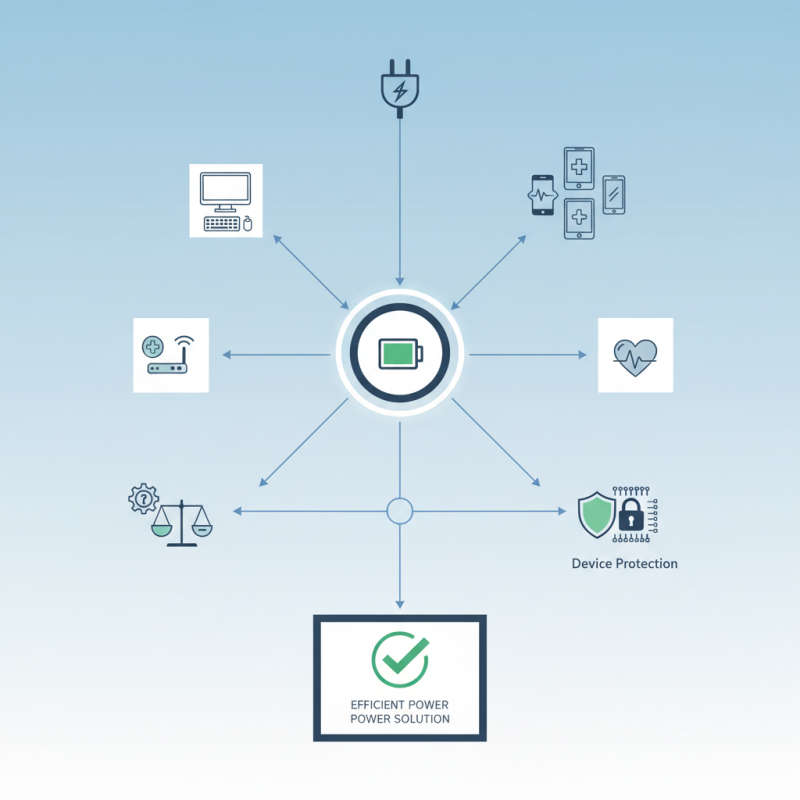
Choosing the right UPS can be challenging. Many options flood the market, but not all meet specific needs. A Multi-output Mini UPS balances performance and adaptability. It caters to individual or business requirements, whether for computers, routers, or critical medical equipment.
Investing in a Multi-output Mini UPS is wise. It enhances overall power management and protects valuable devices. However, not every model suits every situation. It’s essential to assess your power demands and device compatibility carefully. A thoughtful choice can lead to efficient power solutions for your unique circumstances.
Understanding Multi-output Mini UPS: An Overview of Benefits
Multi-output mini UPS systems have gained popularity as reliable power solutions. These devices offer several advantages that cater to various power needs. One significant benefit is their ability to support multiple devices simultaneously. Users can connect several gadgets without worrying about overload. This feature is crucial for those managing sensitive equipment or multiple home appliances.
Another advantage is the compact design of mini UPS units. Their smaller size makes them easy to integrate into any environment. Whether it's a home office or a small business, space often poses a challenge. A mini UPS fits neatly into tight spaces without sacrificing performance. This adaptability appeals to users looking for efficiency.
However, it's vital to assess the capacity of a multi-output mini UPS. Some models may struggle under heavy loads. Users should consider their power requirements before making a decision. Not all devices may be compatible with a mini UPS. Careful evaluation ensures that users select the right model for their needs. Balancing power needs and efficiency is essential for optimum performance.
Power Backup Capacity of Multi-output Mini UPS
This bar chart illustrates the power backup capacity of multi-output mini UPS systems according to the number of outputs. As the number of outputs increases, the power capacity also increases, making these UPS systems versatile for different power needs.
Key Specifications to Consider When Choosing a Multi-output Mini UPS
When selecting a multi-output mini UPS, several key specifications can significantly influence your choice. First and foremost, consider the power output capacity. A mini UPS should provide sufficient wattage to support your devices. For instance, many professional sources indicate that devices might require anywhere from 150 to 600 watts. Understanding your equipment's power needs is crucial. This will prevent overloading the UPS and ensure reliability during outages.
Another vital specification is the number of outlets. A multi-output model should have enough ports for your devices. On average, consumers report the need for at least three to five outputs. This might seem basic, but underestimating outlet requirements is common. Users often find themselves juggling power strips when devices multiply over time. Additionally, look at the battery runtime. Some reports suggest that many mini UPS units offer between 10 to 30 minutes of backup power. This runtime can be insufficient during longer outages, leaving some users grappling with unexpected shutdowns.
Lastly, consider the form factor and weight. Consumers frequently overlook portability. A heavier UPS might hinder mobility in home or office settings. Mixed feedback from users suggests that while compact models are preferred, they sometimes compromise on power capacity. This trade-off can lead to frustration when devices require more power than anticipated. Experimenting with different mini UPS solutions can help in finding the right balance between size, capacity, and usability.
Why Choose a Multi-output Mini UPS for Your Power Needs?
| Specification | Description |
| Output Ports | Multiple ports for simultaneous device connection |
| Output Power | Ranges from 300W to 2000W depending on the model |
| Battery Type | Sealed Lead Acid (SLA) or Lithium-ion options |
| Backup Time | Typically ranges from 15 minutes to 2 hours |
| Form Factor | Compact and lightweight design for easy placement |
| Protection Features | Overload, short circuit, and surge protection included |
| Input Voltage Range | Typically accepts 100-240V AC input |
| Smart Features | LCD display, USB connectivity for monitoring |
Industry Trends: Increasing Demand for Mini UPS Solutions
As industries continue to evolve, the demand for reliable power solutions is surging. A recent report by MarketsandMarkets shows that the global mini UPS market is expected to grow at a CAGR of 6.5% through 2026. This trend is largely driven by the increasing reliance on electronic devices and the need for uninterrupted power supply. Companies across various sectors are recognizing that even a short power outage can lead to significant losses.
Mini UPS systems offer versatile solutions to power needs, with capabilities for multiple outputs. According to a survey conducted by Grand View Research, over 40% of businesses are now investing in multi-output UPS systems to ensure that critical devices remain operational during outages. Many organizations are realizing that these systems can mitigate risks associated with unexpected downtimes. Yet, not all mini UPS solutions are created equal. Some may lack the necessary capacity or features, which can lead to potential inefficiencies.
The trend towards mini UPS solutions is noticeable in sectors like healthcare and telecommunications. Hospitals rely on them to maintain life-saving equipment during power failures. However, the growing market also sees challenges. Manufacturers must continuously innovate to meet increasing demands for efficiency and sustainability. The fluctuation in raw material costs can impact pricing, posing additional concerns for buyers. Reflecting on these complexities can guide companies in making informed decisions, ensuring they choose the right mini UPS systems for their needs.
Comparative Analysis: Multi-output Mini UPS vs. Traditional Power Solutions
When considering power solutions, multi-output mini UPS systems stand out. They provide versatile options compared to traditional power sources. These compact units can simultaneously support multiple devices. Their portability makes them ideal for both home and office use.
In contrast, traditional power solutions often require complex setups. They may lack flexibility and can be cumbersome. Users of traditional systems may face limited backup options. In moments of power failure, this can be problematic. While traditional systems may come with high capacity, their efficiency often pales in comparison to that of mini UPS units.
Some argue that mini UPS systems might not sustain power needs for extended periods. However, their ability to manage various outputs efficiently can outweigh this concern. For everyday tasks like charging phones, powering routers, or supporting small appliances, a mini UPS can provide reliable service. It is essential to evaluate these factors carefully before making a decision.
Real-world Applications: How Multi-output Mini UPS Enhances Power Reliability
In today’s technology-driven environment, having a reliable power source is crucial. Multi-output mini UPS systems filling this gap greatly enhance power reliability across various applications. Research from the Energy Storage Association indicates that intermittent power supply can cost businesses up to 80 billion dollars annually in lost productivity. Multi-output mini UPS systems can mitigate disruptions significantly.
Consider critical infrastructures like hospitals and data centers. In these settings, a single power outage can lead to catastrophic consequences. For hospitals, the uptime requirement often exceeds 99.999%. Multi-output mini UPS systems offer robust backup, ensuring that essential medical equipment remains operational during unexpected outages. Additionally, their compact nature allows easy integration into existing systems without occupying much space.
In industrial plants, operations rely heavily on continuous power flow. A report by the International Electrotechnical Commission points out that nearly 70% of production losses come from power quality issues. Multi-output mini UPS systems can support multiple devices simultaneously, reducing the likelihood of downtime. While these systems provide significant advantages, selecting the right capacity and output options requires careful consideration. Each application has unique power demands, making it essential to have a customized solution.