Why Choose an Autonomous Forklift for Your Warehouse Operations?
As logistics and warehouse operations evolve, technology becomes essential. Autonomous Forklifts are changing the way businesses manage their daily tasks. These innovative machines automate transportation within the warehouse, increasing efficiency. Imagine a workplace where heavy lifting happens without human intervention. This technology doesn’t just facilitate movement; it aims to enhance accuracy and reduce costs.
Adopting Autonomous Forklifts can lead to significant improvements. For example, they can operate continuously, minimizing downtime. However, relying on automation raises questions. Are we ready to trust machines with our operations? While these forklifts may reduce human error, they also require meticulous programming and maintenance.
Understanding their benefits and limitations is crucial. Data shows that warehouses using Autonomous Forklifts experience faster processing times. Yet, some may find the transition daunting. Will your team adapt quickly to new systems? The balance between human oversight and automation is delicate. Embracing this technology can yield great rewards, but it demands careful consideration.
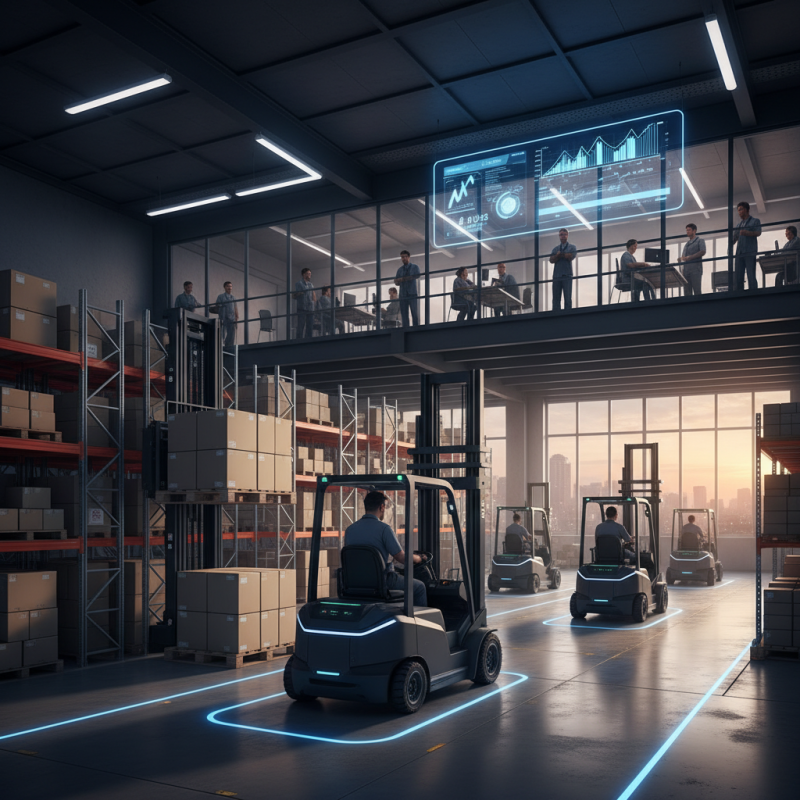
Benefits of Autonomous Forklifts in Warehouse Operations
Autonomous forklifts are revolutionizing warehouse operations. Their efficiency is undeniable. Industry reports suggest that these machines can increase productivity by up to 30%. With reduced human error, they enhance accuracy in inventory management. This is crucial in fast-paced environments where mistakes can be costly.
One notable benefit is the ability to operate continuously. Unlike human workers, autonomous forklifts don’t need breaks. This ability allows for 24/7 operations, leading to a significant increase in throughput. However, reliance on technology means that warehouses must invest in training and maintenance. Operators should understand how to manage the equipment effectively.
Cost savings are another advantage. According to a survey, implementing autonomous forklifts can reduce labor costs by approximately 25%. This figure demonstrates the potential for remarkable returns on investment. However, initial costs may be high. Companies must weigh these factors carefully when considering such technology. Every warehouse must evaluate its unique needs and capabilities before making the transition.
Key Features of Autonomous Forklifts for Efficiency Improvement
In modern warehouse operations, autonomous forklifts stand out due to their impressive features. One key advantage is their ability to navigate without human intervention. They utilize advanced sensors and mapping technology, enabling them to identify obstacles and optimize routes. This results in greater efficiency in material handling.
Another notable feature is their real-time data gathering capability. Autonomous forklifts collect data on inventory levels and traffic flow. This information can be used to improve overall workflow. However, reliance on technology can pose risks. For instance, system malfunctions may disrupt operations. Regular maintenance is essential to avoid these issues.
Moreover, safety is a significant aspect of these forklifts. They come equipped with alarms and emergency stop capabilities. This reduces the likelihood of accidents in busy warehouse spaces. Yet, training staff to understand their operation and limitations remains crucial. Balancing automation with human oversight can enhance safety and productivity.
Cost Savings and ROI: Investing in Autonomous Forklifts
Investing in autonomous forklifts can lead to significant cost savings and enhanced ROI. These machines operate with precision, reducing labor costs and minimizing accidents. They work around the clock, increasing productivity by handling tasks swiftly. In warehouses, where space and efficiency matter, their compact design enables optimal use of available areas.
However, choosing to implement autonomous technology is not without challenges. Initial investments may seem high. Organizations must evaluate their specific needs before making a decision. Consider the long-term savings compared to traditional forklifts. This approach can reveal potential benefits that outweigh early expenses.
Tips: Assess your current operations carefully. Identify bottlenecks that need improvement. Understanding where autonomous forklifts can fit is crucial. Also, engage with teams to gauge their comfort level with automation. Acceptance and training can greatly influence success. Balancing technology implementation with employee needs is essential for a smooth transition.
Safety Enhancements with Autonomous Forklift Technology
Autonomous forklift technology significantly enhances safety in warehouse operations. As per a report by the Occupational Safety and Health Administration (OSHA), nearly 100,000 forklift-related injuries occur each year in the United States alone. These injuries often stem from human error, such as accidents involving operators and pedestrians. Autonomous forklifts reduce these risks by removing the human element from the operation. They are equipped with sensors and machine learning, allowing them to navigate efficiently and avoid obstacles.
In addition to reducing accidents, autonomous forklifts provide real-time data on warehouse conditions. This data can identify high-traffic areas and dangerous conditions. By using this information, warehouse managers can implement strategies to enhance safety further. A study from the National Institute for Occupational Safety and Health (NIOSH) highlighted that workplaces employing such technologies saw a 30% decrease in accident rates. However, integration poses challenges. Proper training and maintenance are essential to ensure that the technology functions as intended.
While autonomous forklifts promise increased safety, reliance on technology also raises concerns. Technical failures can lead to hazards if not monitored correctly. Moreover, the shift to automation requires workers to adapt. Addressing these realities is crucial for successful implementation. As industries move forward, balancing innovation with safety remains paramount.
Why Choose an Autonomous Forklift for Your Warehouse Operations? - Safety Enhancements with Autonomous Forklift Technology
| Feature | Description | Benefits |
| Obstacle Detection | Uses sensors to identify and navigate around obstacles in real-time. | Reduces accidents and improves workplace safety. |
| Automated Navigation | Algorithm-driven paths for efficient movement without human intervention. | Increases productivity and reduces operational costs. |
| Collaboration with Humans | Designed to work alongside human operators safely. | Enhances workflow while ensuring safety for workers. |
| Data Analytics | Tracks and analyzes operational data for efficiency improvements. | Informs decision-making to optimize operations. |
| 24/7 Operation | Can operate continuously without breaks. | Maximizes throughput and keeps the warehouse running smoothly. |
Integration Challenges and Solutions for Autonomous Forklifts in Warehouses
In today's dynamic warehousing landscape, integrating autonomous forklifts presents unique challenges. According to recent industry reports, around 40% of companies face hurdles in seamlessly implementing these automated solutions. A major concern is the existing infrastructure. Older warehouses may lack the necessary layout for safe and efficient autonomous operations. This can lead to safety risks and inefficient workflows.
Moreover, training staff to adapt to new technologies is vital. A study from the International Warehouse Logistics Association found that around 60% of warehouse employees struggled with technology adoption. This gap illustrates the importance of robust training programs. It’s essential to ensure workers understand how to interact with these systems effectively.
**Tip:** Invest in thorough training sessions to ease the transition to autonomous forklifts.
Another significant challenge is integration with existing warehouse management systems (WMS). Many facilities rely on legacy software that may not communicate effectively with new autonomous technology. This can create data silos and reduce overall efficiency. Analysis from a leading logistics firm suggests that failure to address software compatibility could hinder 30% of a facility’s productivity post-implementation.
**Tip:** Regularly assess and upgrade your WMS to align with modern technology.
Choosing the right operational strategy is crucial for overcoming these integration challenges. Understanding these potential roadblocks is the first step towards a successful transition.
Autonomous Forklift Adoption Rates in Warehouses (2020-2023)