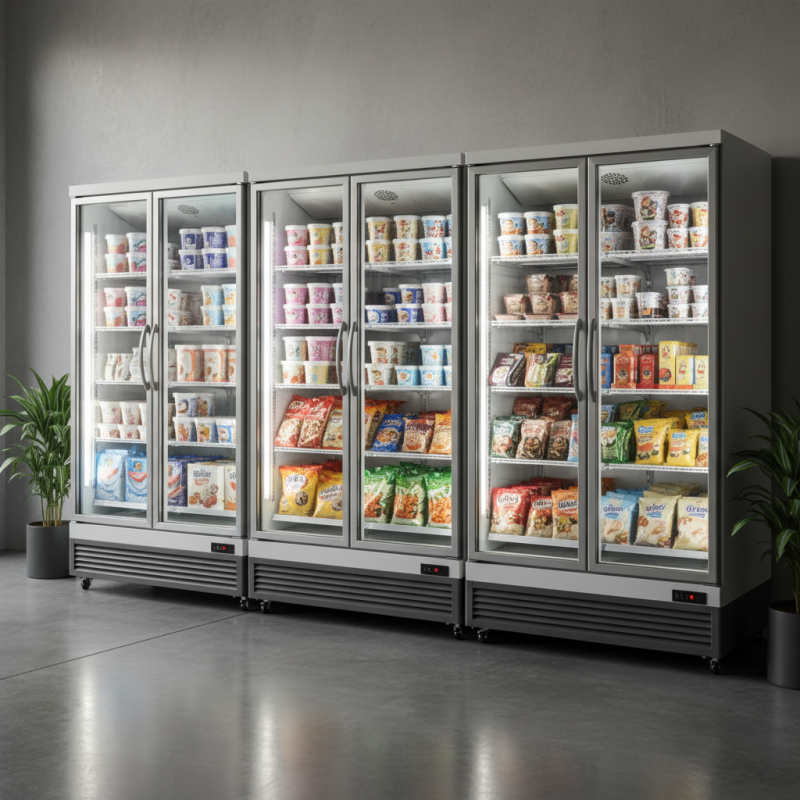
Top Tips for Choosing the Best Glass Door Freezers?
Choosing the best Glass Door Freezers can be a daunting task. These appliances are essential for display and preservation. Their visibility allows customers to see products easily. However, not all models fit every business need.
Consider your space and style. The size and design of glass door freezers vary widely. Some fit neatly in tight corners, while others require more room. Pay attention to the features too. Look for adjustable shelving. Efficient lighting can enhance product visibility.
Think about energy consumption. An energy-efficient model can save costs over time. Reflect on your business demands. Will you need a unit with high capacity? Assessing these factors is crucial. It helps in finding the right balance between functionality and cost.
Understanding Glass Door Freezers: An Overview of Key Features
Glass door freezers are essential in retail settings. They display products while keeping them frozen. Key features matter when choosing one. Energy efficiency is crucial. According to a 2021 report, energy-efficient models can save up to 30% on operating costs compared to older units. This can significantly impact your bottom line, especially for small businesses.
Another important aspect is the size and capacity. Freezers come in various sizes, catering to different needs. Some can hold up to 25 cubic feet of products. Ensure the dimensions fit your space. Clear visibility through the glass doors is vital, too. It helps attract customers and increases sales. A study revealed that well-displayed items boost impulse buying, enhancing profitability.
Lastly, consider the temperature control features. Reliable temperature settings are essential for food safety. Units with digital displays allow precise monitoring. Regular maintenance is critical as well. Dirty coils can lead to inefficient cooling and increased energy costs. Finding the right balance in features can be challenging, yet essential for optimizing your operations.
Energy Efficiency Ratings: How to Choose the Right Model for Savings
When choosing a glass door freezer, energy efficiency is crucial. According to the U.S. Department of Energy, energy-efficient appliances can save consumers up to 30% on their energy bills. Look for models with ENERGY STAR ratings, which indicate higher efficiency. These freezers often use advanced insulation and LED lighting, significantly reducing electricity usage.
It's important to consider the size and condition of the space where the freezer will be installed. A poorly chosen freezer can lead to higher running costs. For instance, if the freezer is too large for your needs, it will consume excess energy. Additionally, older models typically have less efficient technology. In fact, a study from the American Council for an Energy-Efficient Economy revealed that older freezers can use twice as much energy as newer, efficient models.
Think about how often you open and close the door. Frequent access can decrease efficiency. A quick open and close can waste significant cold air. Selecting a model with triple-pane glass can help retain cold temperatures while showcasing your products. Reflect on these aspects to make a well-informed decision and truly benefit from energy savings.
Size and Capacity: Finding the Perfect Fit for Your Business Needs
When choosing a glass door freezer, size and capacity are crucial factors. You need to evaluate the space available in your establishment. Measure the area beforehand to ensure a perfect fit. A freezer that is too large may overwhelm your space. Conversely, a small one might not meet your storage needs.
Consider the products you plan to store. Will it be ice cream, beverages, or frozen meals? Each requires different space and organization. Assess your inventory volume. A busy restaurant may need a high-capacity unit. A small café could suffice with a compact model. Additional shelves can optimize space.
Pay attention to design and accessibility. The door's swing direction matters in tight areas. Watch for height; tall models must fit under ceilings. Evaluate how often you'll restock. It could influence the capacity you choose. Ensure it allows for visibility of items. This makes for easier inventory management.
Top Tips for Choosing the Best Glass Door Freezers
| Model | Size (Cubic Feet) | Capacity (lbs) | Power Consumption (kWh/Year) | Temperature Range (°F) |
| Model A | 15 | 300 | 600 | -5 to 0 |
| Model B | 20 | 400 | 700 | -10 to 5 |
| Model C | 25 | 500 | 800 | -5 to 0 |
| Model D | 30 | 600 | 900 | -10 to 5 |
Temperature Control and Performance: Ensuring Food Safety Standards
When selecting glass door freezers, temperature control is critical. This directly affects food safety. According to the Food and Drug Administration (FDA), food should be stored at or below 0°F to maintain quality and safety. Freezers without proper temperature regulation can lead to spoilage. Regularly checking the temperature can ensure compliance with safety standards.
Performance is influenced by the design of the freezer. A report by the American Society of Heating, Refrigerating and Air-Conditioning Engineers (ASHRAE) indicates that proper airflow within the freezer helps maintain a consistent temperature. Freezers that hinder airflow can cause uneven cooling. Consequently, some food items may freeze while others may not reach safe temperatures. This inconsistency demands attention.
Energy efficiency is another aspect. Energy Star reports indicate that well-designed freezers use up to 30% less energy. However, not all models are efficient. Some might consume more energy due to poor insulation or outdated technology. This can indirectly affect food safety if the device does not work correctly. Regular maintenance and periodic evaluations are essential to ensure optimal performance and safety.
Cost vs. Quality: Evaluating Investment for Long-Term Benefits
Investing in a glass door freezer might seem daunting at first. The balance between cost and quality directly impacts long-term benefits. According to industry reports, energy-efficient freezers could save around 20% on electricity bills. This means, while upfront costs may be higher, the savings accumulate over time.
Choosing high-quality material is essential. A report from the Refrigeration Institute indicates that durable materials enhance insulation. This characteristic plays a pivotal role in energy conservation. Lower-quality models often lead to increased maintenance issues. If you're spending less now, you might pay more later.
Analyze your needs carefully. An oversized freezer can lead to wasted energy. In contrast, a too-small unit could require frequent restocking. It’s all about finding that sweet spot. Always consider possible future needs. Sometimes the cheapest option isn't the best long-term strategy. Reflect on the potential return on investment. Making a thoughtful choice is crucial.