What is a Bent-axis Motor and How Does it Work?
The Bent-axis Motor is a unique type of hydraulic motor. Its design offers distinct advantages in various applications. By understanding its mechanics, we can appreciate its functionality more clearly.
This motor utilizes a bent axis for operation. The angled pistons create a direct connection between motion and hydraulic power. It is efficient and compact, often used in mobile equipment. However, it also has limitations that can affect performance.
The Bent-axis Motor is not just a technical marvel; it requires careful consideration in design. Engineers must focus on optimizing its efficiency. Miscalculations or poor materials can lead to significant issues. These challenges remind us that innovation is an ongoing journey, rather than a destination.
What Is a Bent-axis Motor? An Overview of Its Design and Function
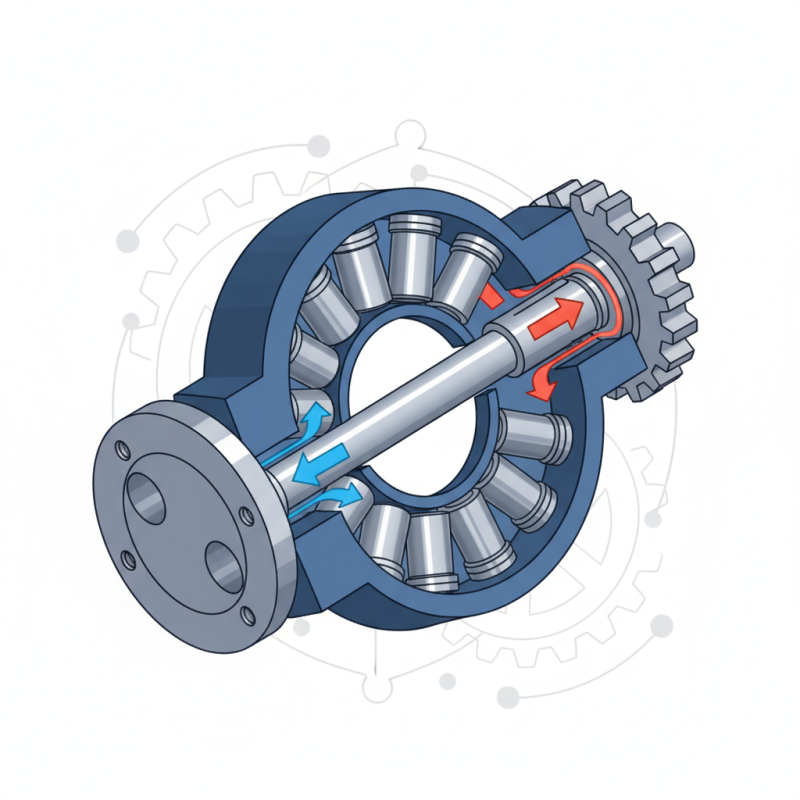
A bent-axis motor is a unique type of hydraulic motor known for its efficiency and versatility. It features a design where the axis of the pistons is bent at an angle. This allows for improved flow characteristics and better power output. Generally, the motor consists of a cylindrical housing, pistons, and a shaft. The bent angle enables the pistons to push against the fluid effectively, resulting in high torque generation.
When you’re considering a bent-axis motor, think about its applications. These motors are often used in heavy machinery, construction equipment, and even some automotive systems. They can operate at high pressures, making them suitable for demanding environments. Due to their design, they can have higher efficiency compared to traditional motors, which is beneficial for energy savings.
Tips: Always assess your power requirements before choosing a motor. Check the compatibility of the motor with your system's hydraulic fluid. Maintenance can be tricky; ensure regular checks to prevent leaks and wear. A small oversight can lead to performance issues. Investing in a quality bent-axis motor can save you money in the long run, but doing thorough research is essential.
What is a Bent-axis Motor and How Does it Work? - Overview of Its Design and Function
| Parameter | Description |
| Design Type | Bent-axis configuration |
| Operating Principle | Converts hydraulic energy into mechanical energy |
| Applications | Industrial machinery, mobile equipment, and aerospace |
| Advantages | High efficiency, compact design, high torque output |
| Disadvantages | Sensitivity to contamination, requires precise alignment |
| Maintenance | Regular fluid checks and replacement of seals |
| Typical Speed Range | 1000 to 3000 RPM |
Key Components of a Bent-axis Motor and Their Roles in Operation
Bent-axis motors are unique and efficient machines. They convert hydraulic energy into mechanical energy. Understanding their key components helps us grasp their function.
One important part of a bent-axis motor is the cylinder. The cylinder houses pistons that move in response to hydraulic fluid pressure. This movement creates rotation, which powers machinery. Additionally, the bent-axis design allows for a more compact unit. This can be beneficial in tight spaces.
Another crucial component is the swash plate. The angle of the swash plate determines the motor's output speed and torque. If the angle is incorrect, it can cause inefficiency. This part requires precise calibration for optimal performance. Lastly, there are seals and bearings that ensure smooth operation. Faulty seals may lead to leaks, impacting overall function. Each component plays a vital role in the motor's operation and understanding them is necessary for maintenance.
How Bent-axis Motors Generate Torque: The Physics Explained
Bent-axis motors operate using a unique geometry that enhances performance. The design features an eccentric arrangement, allowing the motor's piston to pivot as it moves. When hydraulic fluid enters the cylinder, it pushes the piston. This motion generates torque through the angle of the eccentricity. The key idea here is simple yet effective. The angled input shaft creates a force that translates into rotational motion.
Understanding the physics behind torque generation is essential. As fluid pressure changes, the piston's movement alters the angle of attack. This results in varying degrees of torque output. When the piston angles increase, the force applied changes, impacting efficiency. Unfortunately, precision is critical; any inconsistencies in fluid flow can lead to performance drops. Recognizing these nuances can help in improving design or operation in various applications.
This system's reliance on hydraulic pressure illustrates a delicate balance between force and motion. Each component's role is vital, and even small errors can lead to significant issues. The motor’s efficiency can diminish without careful consideration of hydraulic dynamics. Thus, while the bent-axis motor is a powerful tool, it requires precise input to function optimally.
Advantages of Bent-axis Motors in Various Applications and Industries
Bent-axis motors have gained traction in various industries due to their unique design and operational efficiency. These motors are compact and lightweight, making them ideal for applications where space is at a premium. Their bent-axis configuration allows for high torque output at lower speeds, which can be a significant advantage in heavy machinery and aerospace applications.
In hydraulic systems, bent-axis motors excel because of their ability to maintain efficiency under varying loads. They have a direct connection to the hydraulic pump, minimizing energy loss. This feature reduces operational costs and enhances performance in construction equipment and agricultural machinery. However, users must consider factors like potential vibrations that can affect longevity.
The automotive industry, too, benefits from the adaptability of bent-axis motors. They provide smooth operation in electric vehicles, contributing to better energy efficiency. As adoption increases, manufacturers might face challenges in scaling production while maintaining quality. Refining the manufacturing process will be crucial for future innovation in this sector.
Comparative Performance Metrics: Bent-axis Motors vs. Other Motor Types
Bent-axis motors are gaining attention in various industries for their efficiency. Compared to traditional motors, these motors showcase better torque density. They often feature a more compact design, allowing them to deliver power in tighter spaces. A recent industry report indicated that bent-axis motors can achieve an efficiency rate of up to 95%. This is significantly higher than the average efficiency of standard electric motors, which usually ranges from 70% to 90%.
In terms of performance metrics, bent-axis motors excel in scenarios requiring high power-to-weight ratios. They are particularly suitable for hydraulic applications and automotive systems. For instance, in certain applications, they can outperform other types by providing 30% more torque while consuming less energy. However, this does not mean they are perfect. Installation can be complex, requiring more precise alignment. Maintenance needs should also be considered, as improper care could lead to early failures.
Tips: Always ensure proper alignment to maximize efficiency. Regular maintenance checks can prevent unexpected breakdowns. Consider your application needs carefully before choosing a motor type. The decision between bent-axis and other motors should be based on specific performance requirements and potential trade-offs.
Comparative Performance Metrics: Bent-axis Motors vs. Other Motor Types