Top 10 Benefits of Using Overhead Cranes for Your Business?
In today's fast-paced industrial landscape, the importance of efficient material handling cannot be overstated. overhead cranes play a crucial role in enhancing productivity and safety in various sectors. According to a recent report by the Material Handling Industry Association, companies can increase their operational efficiency by up to 30% through the adoption of advanced lifting solutions like overhead cranes. These machines facilitate the seamless movement of heavy loads, reducing the risk of workplace injuries and accidents.
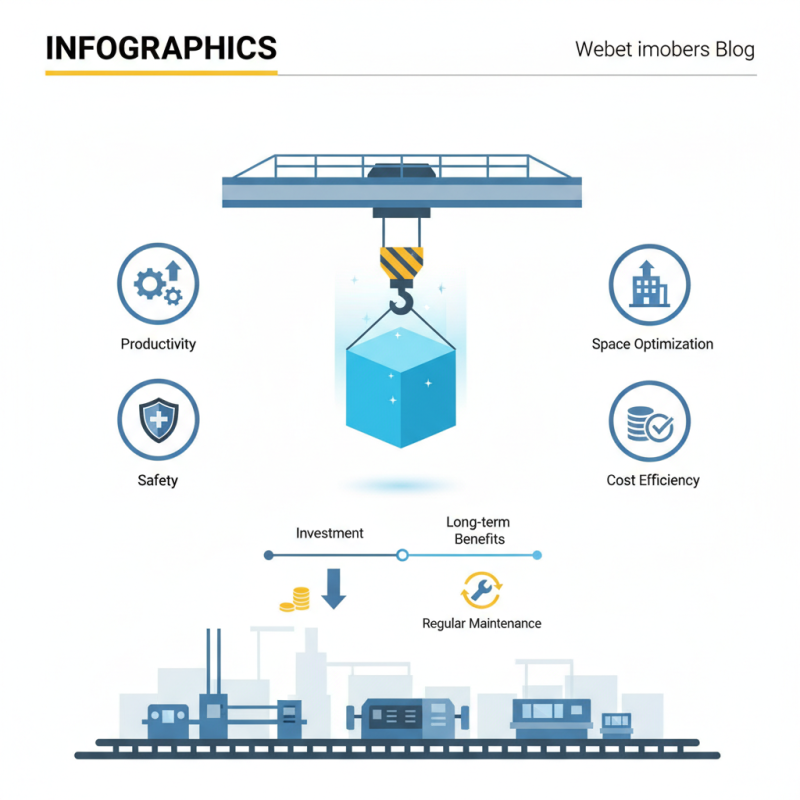
Moreover, overhead cranes can significantly optimize space utilization. By operating above ground level, they free up valuable floor space for other productive activities. This can be especially beneficial in environments with tight constraints. However, investing in overhead cranes requires careful planning. Businesses must assess their specific needs and the potential for integration into existing processes.
While the initial investment may seem high, the long-term benefits often outweigh these costs. A survey indicated that companies utilizing overhead cranes observed a decrease in operational downtime, maximizing their profit margins. However, businesses should remember that regular maintenance is necessary to ensure safety and reliability. Understanding the balance between cost and benefit is essential in making this key decision.
Benefits of Enhanced Load Handling Efficiency with Overhead Cranes
Overhead cranes play a crucial role in enhancing load handling efficiency in various industries. Reports indicate that the use of these cranes can increase productivity by up to 30%. This increase is attributed to their design, which allows for smooth movement of heavy loads. The impact is particularly significant in manufacturing, where time-saving translates directly into cost savings. Operators can lift and move materials quickly, decreasing downtime.
In addition to efficiency, safety is a major benefit. According to safety statistics, workplaces that use overhead cranes see a reduction in accidents related to manual handling. This not only safeguards employees but also minimizes equipment damage. Many companies report fewer worker compensation claims after implementing these systems. Enhanced ergonomics is another advantage; operators experience less strain compared to manual lifting methods.
However, there are challenges as well. Implementing overhead cranes requires proper training and maintenance. Without this, the efficiency gains could be diminished. Some facilities face integration issues with existing workflows. Attention to these details is essential for maximizing the benefits. The potential of overhead cranes is significant, but businesses must prepare adequately to realize these advantages.
Reduction in Labor Costs through Automation and Ergonomics
Overhead cranes have transformed industrial operations by enhancing efficiency. They automate lifting tasks, significantly reducing labor costs. According to a report from the National Safety Council, automating material handling can cut labor costs by up to 30%. With fewer manual handling tasks, employees can focus on more critical activities. This not only boosts productivity but also improves job satisfaction.
Ergonomics plays a vital role in the benefits of overhead cranes. Injury rates drop dramatically when workers use these cranes. Studies indicate that workplaces using cranes report 50% fewer musculoskeletal injuries. This reduction saves companies money on medical expenses and worker compensation. A healthier workforce is a more productive workforce, which can lead to overall improved business performance.
However, businesses must consider the initial costs of implementing overhead cranes. Installation and maintenance can be costly, and not every company has the budget. Companies must weigh these factors against long-term savings. Transitioning to automated systems requires proper training. Employees must be comfortable using new technology to reap its full benefits.
Improvement in Workplace Safety Standards and Regulations Compliance
Overhead cranes play a crucial role in workplace safety. They reduce the risk of heavy lifting injuries. Proper use and maintenance of these cranes can improve compliance with safety regulations. This leads to a safer working environment.
When implementing overhead cranes, ensure regular training for employees. Training should cover operation, safety checks, and emergency procedures. Create an accessible safety manual specific to your operations. Maintain a regular inspection schedule for your cranes. Addressing any issues immediately is essential.
Encourage a culture of safety in your workplace. Engage employees in safety discussions regularly. Solicit their feedback on crane operations. Acknowledging their insights shows you value their safety. Always stay updated on local safety regulations to maintain compliance. Regular audits can help identify gaps in safety practices and improve standards.
Increase in Operational Flexibility for Various Lifting Applications
Overhead cranes are essential for enhancing operational flexibility in various lifting applications. According to the Occupational Safety and Health Administration (OSHA), proper use of cranes can reduce workplace injuries by up to 70%. This is critical not only for employee safety but also for overall operational efficiency. Many businesses find that integrating overhead cranes improves their ability to handle large and heavy loads, significantly streamlining their processes.
When using overhead cranes, a tailored approach is vital. Each lifting application may require different configurations and capabilities. Reports suggest that businesses analyzing their specific needs not only increase productivity but also prolong equipment lifespan. Regular training sessions on crane operation can also enhance safety and performance.
Tips for optimizing crane use include performing routine maintenance and ensuring operators are highly trained. Misuse of cranes can lead to costly accidents and downtimes. Gathering data on lifting patterns can help identify inefficiencies. Embracing new technologies, such as remote monitoring systems, can greatly improve operational flexibility while ensuring safer handling of materials.
Long-term ROI Analysis: Cost Savings and Productivity Gains
Investing in overhead cranes can lead to significant long-term ROI. These machines enhance productivity by streamlining material handling processes. For instance, lifting heavy items that would require multiple workers becomes effortless. This not only reduces labor costs but also minimizes the risk of workplace injuries. Effective load management allows for smoother operations in busy environments.
Cost savings are another key aspect. Regular maintenance is essential, yet overhead cranes usually have low upkeep costs compared to other equipment. Implementing such systems may seem expensive initially, but a careful ROI analysis reveals substantial gains over time. Businesses can often recover their investments within a few years, depending on usage. Additionally, with fewer delays and enhanced efficiency, overhead cranes contribute to faster production cycles, which can elevate overall profits.
However, careful planning is crucial. Not all businesses may fully utilize these systems. Some industries might overestimate their needs, leading to underuse. Reflecting on these factors helps ensure proper implementation. Organizations should assess their unique requirements before committing. Achieving a successful ROI with overhead cranes demands both dedication and understanding of operational dynamics.