What Are the Benefits of Conveyor Belt Rollers in Industry
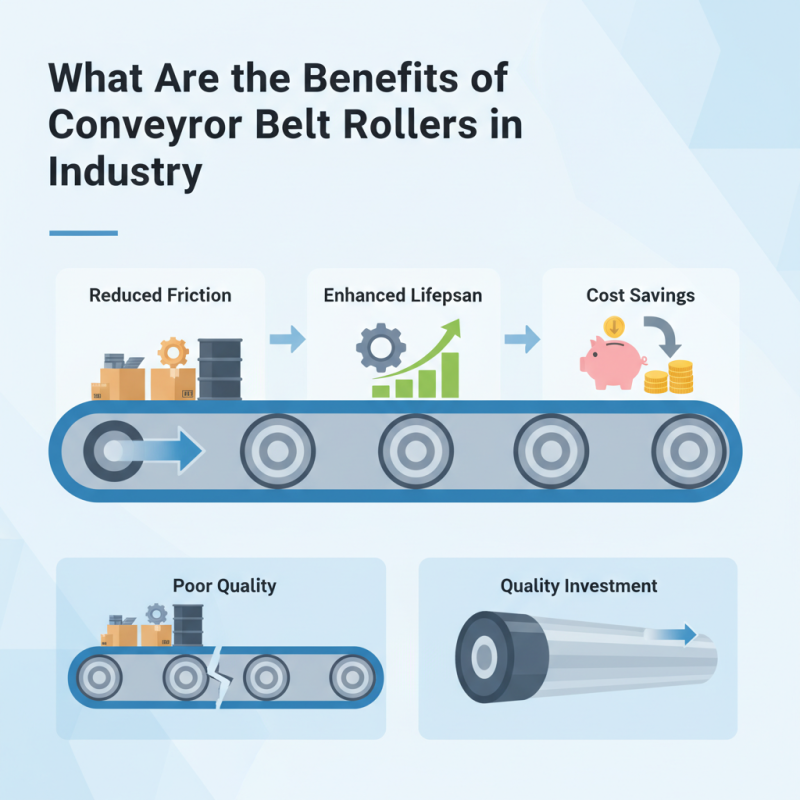
In modern industry, efficiency is key. conveyor belt rollers play a crucial role in this. These components support the conveyor belts that move materials. They reduce friction and help the belts run smoothly. Without them, operations could slow down significantly.
Manufacturers often overlook the impact of conveyor belt rollers. Yet, they are essential for maintaining productivity. Choosing the right rollers can lead to improved performance. They come in various materials and sizes, fitting different needs. Poor quality rollers can cause issues like uneven movement and breakdowns.
Understanding the benefits of conveyor belt rollers is vital. They enhance the lifespan of the conveyor system. With better rollers, businesses can save on maintenance costs. It's important to invest in quality to avoid future problems.
Overview of Conveyor Belt Rollers and Their Functionality
Conveyor belt rollers play a crucial role in conveying systems. They support the belt while allowing it to move efficiently. These rollers minimize friction and wear, which can extend the lifespan of the entire conveyor system. According to industry reports, over 70% of material handling operations utilize conveyor belts. This statistic highlights their importance across various sectors.
The functionality of conveyor belt rollers can vary greatly. Some are designed for specific loads or speeds. For instance, heavy-duty rollers can handle significant weight without compromising performance. This versatility is critical in industries like mining or manufacturing, where heavy materials are common. However, not all rollers function optimally under these conditions. Inaccurate roller selection often leads to increased downtimes and maintenance costs.
Additionally, the material used for rollers impacts their efficiency. Steel rollers are durable but heavier, while plastic rollers are lighter but may wear out faster. Balancing these factors is key for operational success. Studies have shown that replacing worn rollers can reduce energy consumption by up to 20%. Thus, regular maintenance and timely upgrades could greatly enhance productivity. Understanding the right choice of rollers requires reflection and analysis of specific operational needs.
Types of Conveyor Belt Rollers Used in Various Industries
Conveyor belt rollers are essential in many industries. These rollers come in various types, each serving a specific purpose. The most common types include trough rollers, impact rollers, and return rollers. Trough rollers are designed to support the conveyor belt, allowing materials to stay on top during transport. They are widely used in mining and heavy industries.
Impact rollers, on the other hand, absorb shock and protect the belt from heavy loads. These are crucial in environments where materials are fed onto conveyors with force, like construction sites. Return rollers ensure the belt moves smoothly back to the loading area. They play a vital role in maintaining belt alignment and preventing wear.
Tips: Choose the right roller for your application. Not all rollers suit every environment. Evaluate factors such as load capacity and material characteristics. Regular maintenance is key. Inspect rollers for wear regularly to avoid unexpected breakdowns. Early detection can save costs and reduce downtime in your operations.
Benefits of Conveyor Belt Rollers in Different Industries
Key Benefits of Implementing Conveyor Belt Rollers in Operations
Conveyor belt rollers play a crucial role in various industries. Their primary function is to support and transport materials efficiently. When integrated into operations, they enhance productivity significantly. They provide a smooth surface for items to glide over. This reduces friction and wear on the belts themselves. As a result, equipment lifespan increases.
Another key benefit is the reduction of manual labor. Workers spend less time moving goods. This can lead to a safer work environment. However, reliance on automated systems raises concerns. Training staff to handle maintenance is essential. The initial setup may require a significant investment. Yet, over time, the return on this investment can be substantial.
Consider the importance of maintenance. Conveyor rollers need regular checks to function optimally. Neglecting this can lead to unexpected downtime and costly repairs. It's crucial to find a balance between automation and human oversight. Emphasizing both aspects can lead to smoother operations and fewer disruptions.
Impact of Conveyor Belt Rollers on Efficiency and Productivity
Conveyor belt rollers play a critical role in enhancing efficiency and productivity in various industries. These components support the belt, facilitating smooth movement of materials. When properly maintained, they reduce friction, leading to less energy consumption. Consequently, businesses can lower operational costs. However, neglecting regular maintenance can lead to performance issues. Rollers might become misaligned or worn out, affecting production flow.
Regular inspection of conveyor belt rollers is vital. Ensure they are clean and free from debris. Poorly maintained rollers can cause belt tracking problems. This can result in material jams or delays. Such issues might seem minor but can lead to significant downtime. Investing time in routine checks helps prevent these hiccups.
Another key aspect is the selection of appropriate roller types. Different materials and applications require specific rollers. Using the wrong type can hinder efficiency. It’s essential to evaluate your needs carefully. A mismatched roller can complicate operations, leading to frustration and inefficiency. Understanding the specific requirements of your conveyor system requires careful thought.
Maintenance and Longevity of Conveyor Belt Rollers in Industrial Settings
In industrial settings, maintaining conveyor belt rollers is crucial for operational efficiency. Regular inspections help identify wear and tear before it leads to bigger issues. A simple visual check can reveal misalignment or damaged bearings, which can cause unexpected downtimes. Additionally, keeping the rollers clean is vital. Dirt and debris can hinder their performance, leading to premature failure.
Longevity of conveyor belt rollers often hinges on proper lubrication. However, it’s easy to overlook this maintenance step. Using the right type of lubricant can make all the difference. Over-lubrication can attract more dirt, while under-lubrication can cause excessive friction. Finding the right balance requires ongoing attention.
Another common issue is understanding the load capacity of the rollers. Exceeding the limits can accelerate wear. Operators must be aware of these specifications. Neglecting to train staff on these details leads to mistakes. Reflections on past errors might help improve future practices. Maintenance is an ongoing learning process, always evolving.