2026 Top EV Coolant Heater Features and Benefits Explained?
As the electric vehicle (EV) market continues to grow, the significance of the Ev Coolant Heater becomes increasingly clear. This essential component plays a vital role in maintaining optimal battery temperatures. It ensures that batteries operate efficiently in varying climates. A well-functioning coolant heater can enhance performance and extend the life of EV batteries. Moreover, it contributes to faster cabin heating, which improves passenger comfort.
In 2026, understanding the features and benefits of EV Coolant Heaters will be crucial. Many users are still unfamiliar with how these systems work. Some may overlook their importance, thinking they are just unnecessary add-ons. However, the reality is quite different. An efficient EV Coolant Heater can prevent energy loss and improve overall vehicle efficiency. It addresses the challenges posed by cold weather operations that many EV owners face.
These heaters come with various features designed to enhance usability and efficiency. Some models offer programmable settings for convenience. Others focus on energy-saving capabilities. It is worth noting that while most designs are effective, some may fall short of expectations. Users must consider their specific needs. An informed decision can significantly improve their driving experience.
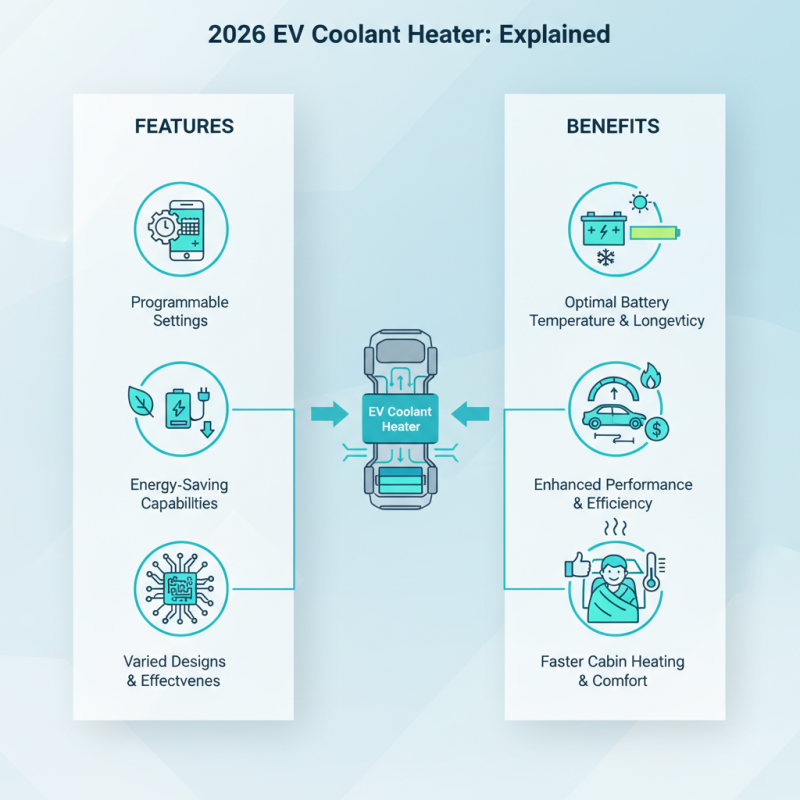
2026 EV Coolant Heater: An Overview of Key Features and Innovations
The 2026 EV coolant heater is designed with cutting-edge features that enhance vehicle performance. This system provides efficient heat management, ensuring that the battery operates within an optimal temperature range. Maintaining the right temperature is crucial for battery life and performance.
One innovative feature is adjustable heating settings. Drivers can customize the heater’s output based on their needs. This flexibility allows for energy conservation when full heat is unnecessary. Another important aspect is the compact design. It fits seamlessly into the vehicle’s architecture, saving space and simplifying installation.
However, some challenges remain. The complexity of integration with existing systems can pose difficulties. Users might need to adapt their usage habits for optimal benefits. Balancing performance with efficiency is still a work in progress. Some might find the new technology intimidating. Overall, the 2026 EV coolant heater promises significant advancements but requires careful consideration from users.
The Role of EV Coolant Heaters in Enhancing Battery Efficiency
Electric vehicles (EVs) rely on effective thermal management systems to ensure battery performance. One key component is the EV coolant heater. These heaters warm the battery during cold conditions. This is critical as battery efficiency declines in low temperatures. An optimized temperature range can significantly enhance performance.
A coolant heater can even maintain battery temperature, maximizing its lifespan. Without proper heating, energy loss occurs. This leads to reduced range and diminished performance. It’s essential to recognize the limitations of current cooling technologies. Some may struggle in extreme temperatures. Issues may arise when attempting to achieve a balance between heating and energy conservation.
Integrating advanced coolant heater features can address these challenges. For example, adaptive temperature controls could help optimize energy use. On the other hand, the complexity of adding these features raises concerns. Will they increase maintenance needs or cost? This remains an important point for future development.
2026 Top EV Coolant Heater Features and Benefits Explained
| Feature | Benefit | Impact on Battery Efficiency | Energy Consumption |
| Fast Heating | Reduces wait time for comfortable cabin temperature | Improves battery performance in cold conditions | Moderate |
| Compact Design | Saves space and integrates easily with existing systems | Allows for better weight distribution | Low |
| Temperature Regulation | Maintains optimal battery temperature | Prolongs battery life and performance | Moderate |
| Durability | Designed for long-term reliability | Reduces maintenance costs | Low |
| Smart Control | Offers customizable temperature settings | Enhances user experience and energy management | Variable |
Comparative Analysis of EV Coolant Heater Technologies and Materials
Electric vehicles (EVs) rely heavily on efficient cooling systems. Coolant heaters play a crucial role in maintaining optimal battery temperatures. Several technologies exist, with each offering unique advantages.
Traditional resistive heating is common, but it can be inefficient. Advanced options include heat pumps, which leverage outside air. They can provide warmth with less energy than resistive heaters. This technology improves the overall range of EVs in cold climates. Some systems use phase change materials. These materials can store heat, releasing it slowly. This provides a consistent temperature and enhances efficiency.
**Tips**: Consider thermal management when purchasing an EV. Good cooling systems can extend battery life. Regular maintenance of heaters is essential. Check for signs of wear and tear frequently.
Engineers are also exploring new materials like carbon nanotubes and graphene. These materials promise better conduction and thermal stability. Yet, they are still in testing phases, raising questions of reliability and cost. Using less established technologies in EVs can yield mixed results.
**Tips**: Stay updated on material innovations. They may enhance your EV experience significantly. Be cautious about new tech until proven effective. Reassessing your vehicle’s thermal management can lead to improved performance.
2026 Top EV Coolant Heater Features and Benefits
Benefits of Optimized Thermal Management for Electric Vehicles
Optimized thermal management is crucial for electric vehicles (EVs). Proper temperature regulation enhances the efficiency of the battery system and extends its life. With improvements in coolant heater technology, thermal management systems are becoming more efficient. These systems help maintain battery temperature during various driving conditions.
An effective coolant heater prevents overheating in colder climates. It enables the battery to operate within an ideal range, enhancing performance. Improved thermal management leads to reduced energy consumption, and that means longer driving ranges. Additionally, it allows for faster charging times, which is vital for user convenience.
However, many EV manufacturers still face challenges. Balancing cost and performance can be tricky. Not every solution fits every vehicle. Some could find the installation process cumbersome or insufficiently optimized. Continuous improvements are essential for widespread adoption. The industry must work together to address these concerns and unlock the full potential of EV coolant systems.
Future Trends in EV Coolant Heater Design and Market Implications
The design of electric vehicle (EV) coolant heaters is evolving rapidly. Future trends indicate a shift towards more efficient thermal management systems. These systems are essential for maintaining battery performance. Improved heaters can reduce energy consumption. They also enhance the overall driving range of EVs. Lightweight materials and compact designs will become standard. This will create more space for larger batteries.
Market implications are significant. As technology advances, the cost of production decreases. This will make EVs more accessible to consumers. However, challenges remain. There are concerns about reliability and longevity. Manufacturers must prioritize testing. Striking a balance between performance and affordability is vital. Additionally, adapting to new regulations could complicate the design process.
Innovation will play a key role. New designs may integrate smart technologies. These can optimize heating based on driving conditions. User feedback will be important. It may reveal flaws in current designs. Continuous improvement is necessary to meet the demands of modern consumers. The future looks promising, yet there is much to address.